Insecticidal Soap for Whiteflies
Garden Soap Team
· 8 min read
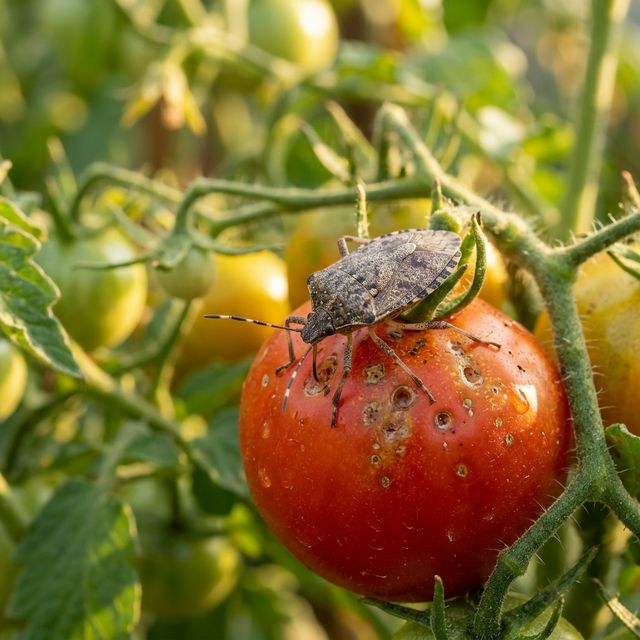
Whiteflies are the pest that tests a contact spray the hardest. They breed fast, they fly away when you try to spray them, they hide under leaves, and they secrete sticky honeydew that attracts sooty mold. They’re the cockroaches of the garden world.
The good news? Insecticidal soap is the single most effective organic weapon against whiteflies, if you use it right. And most people don’t. If you need traps, neem follow-up, and biological controls in one plan, use how to get rid of whiteflies.
Here is the Garden Soap Team method for whiteflies: contact soap, repeated sprays, and leaf-underside coverage — from extension guidance, not a personal trial history.
Why Whiteflies Are Harder Than Other Pests
Before diving into treatment, understand why whiteflies require a different approach than aphids or spider mites:
- They fly. Unlike aphids that sit still, whiteflies scatter when disturbed. This makes spray coverage much harder.
- Multiple life stages. At any given time, your plants host eggs, crawlers, nymphs, and adults, and soap only kills the nymph and adult stages.
- Rapid reproduction. A single female lays 200-400 eggs. Populations can double in under a week in warm weather.
- Honeydew secretion. Their sticky waste coats leaves, blocking photosynthesis and inviting secondary fungal infections.
This is why the “spray once and forget” approach fails miserably with whiteflies. You need a systematic, multi-week strategy.
The Best Insecticidal Soap Recipe for Whiteflies
Homemade Version
Mix 2 tablespoons of pure liquid castile soap per 1 quart of water. Use the higher end of the extension concentration range for whiteflies because their waxy coating is slightly thicker than aphids’.
What you need:
- Dr. Bronner’s Pure Castile Liquid Soap (unscented)
- Distilled or rainwater
- 32 oz spray bottle with fine-mist nozzle
For severe infestations, add 1 teaspoon of cold-pressed neem oil to the mix. The azadirachtin in neem disrupts whitefly feeding and reproduction, giving you systemic protection between sprays. See our full neem oil soap recipe.
Commercial Option
If you prefer ready-made, Safer Brand Insect Killing Soap Concentrate is the best value. It uses the same potassium salts of fatty acids as homemade but in a pre-measured formulation. Follow label directions for whitefly-specific dilution.
The 3-Week Whitefly Elimination Plan
This is the 3-week schedule the Garden Soap Team publishes from extension timing notes — not a personal spray diary:
| Week | Day | Action | Why |
|---|---|---|---|
| 1 | Mon | Heavy spray, all affected plants | Kill adult and nymph populations |
| 1 | Fri | Second spray | Catch crawlers that emerged from eggs |
| 2 | Tue | Third spray | Break the reproduction cycle |
| 2 | Sat | Inspect closely | Check population reduction |
| 3 | Wed | Maintenance spray | Catch any remaining stragglers |
| 3+ | Weekly | Monitor + spot spray | Prevent resurgence |
Key principle: You’re not trying to kill everything in one shot. You’re systematically eliminating each generation before adults can lay new eggs.
Spraying Technique for Whiteflies (It’s Different)
Whiteflies require a different technique than stationary pests like aphids:
The “Sneak Spray” Method
- Approach slowly, whiteflies sense vibration and will fly off disturbed plants
- Spray leaf undersides first, that’s where nymphs cluster and adults rest
- Work from the bottom up, adults fly upward when startled, so start low
- Set up yellow sticky traps near plants, they catch the adults that escape your spray
- Return 10 minutes later, whiteflies that flew away often resettle; catch them with a second pass
Coverage Checklist
- ✅ Leaf undersides (where 90% of whiteflies live)
- ✅ Leaf stems and petioles (nymphs hide in crevices)
- ✅ New growth tips (preferred egg-laying sites)
- ✅ Neighboring plants (whiteflies spread fast)
- ❌ Don’t bother with soil (whiteflies don’t live in soil)
Best Time to Spray for Whiteflies
Early morning, 6-9 AM. Here’s why this matters more for whiteflies than other pests:
- Whiteflies are cold-blooded, in morning coolness (below 65°F), they’re sluggish and won’t fly away
- The spray has maximum contact time before evaporation
- Pollinators aren’t active yet, so spray is safer for beneficials
Avoid spraying at midday (causes leaf burn) or right before rain (washes off immediately).
Plants Most Vulnerable to Whiteflies
Whiteflies are particularly attracted to:
- 🍅 Tomatoes, their #1 garden target
- 🌿 Basil and herbs
- 🥒 Cucumbers and squash
- 🌸 Hibiscus and flowering plants
- 🥬 Brassicas (cabbage, kale, broccoli)
- 🏠 Indoor houseplants, especially in winter
All of these respond well to insecticidal soap treatment. Check our plant sensitivity guide for any species-specific cautions.
What If Soap Alone Isn’t Enough?
For heavy infestations, combine strategies using an integrated pest management approach:
- Soap spray, your primary weapon (kills on contact)
- Neem oil addition, add to your soap recipe for systemic action
- Yellow sticky traps, catch flying adults between sprays
- Beneficial insects, green lacewing larvae are voracious whitefly predators
- Reflective mulch, aluminum foil or reflective mulch below plants disorients whiteflies
- Remove heavily infested leaves, reduce the breeding population fast
Common Mistakes When Treating Whiteflies
- Only spraying once, you must break the reproduction cycle with 3+ applications
- Spraying from above, whiteflies live on leaf undersides; top-down spraying misses them
- Using dish soap, detergents damage plants; use pure castile soap
- Waiting too long, treat at first sight; whitefly populations grow exponentially
- Ignoring neighboring plants, whiteflies spread to adjacent foliage within days
Prevention After Treatment
Once you’ve eliminated the infestation:
- Inspect new plants before adding them to your garden (quarantine for a week)
- Spray preventively every 2 weeks during warm months
- Encourage natural predators, avoid broad-spectrum pesticides that kill beneficials
- Use companion plants that repel bugs, marigolds and nasturtiums near susceptible crops
Listing checks before you buy
Whitefly listings sell “kill on contact.” What matters is concentration, mist, and whether you also need neem between sprays. These are Garden Soap Team label checks — not a bottle trial.
- Concentration: Use 2 tablespoons of unscented castile per quart — the high end of the extension range, not a stronger-than-label mix. Start from the core how-to.
- Fine mist: A coarse jet knocks adults into the air and misses nymphs on leaf undersides. A 32 oz bottle with a true fine-mist nozzle is the right hardware for this job.
- Concentrate vs kitchen mix: A labeled potassium-salt concentrate is the option if you do not want to measure. Compare bottles in the best insecticidal soaps notes. Follow the whitefly dilution on the label.
- Neem as follow-up, not a first spray: Cold-pressed neem disrupts feeding between contact sprays. The combo formula is on the neem oil soap recipe. When to pick which is in soap vs neem.
- Traps and timing: Soap does not kill eggs. Pair the 3-week schedule with how to get rid of whiteflies for traps and biologicals.
Whiteflies are frustrating, but they’re completely manageable with consistent soap spray applications and good garden hygiene. Start spraying at the first sign, follow the 3-week plan, and you’ll have them under control.
Frequently Asked Questions
Does insecticidal soap kill whiteflies? ▼
Yes, insecticidal soap is one of the most effective organic treatments for whiteflies. The potassium salts of fatty acids dissolve the whitefly's soft waxy coating, causing rapid dehydration and death within hours of direct contact.
How many times do I need to spray insecticidal soap for whiteflies? ▼
Plan for at least 3-4 applications over 2-3 weeks. Spray every 4-5 days to catch newly hatched nymphs. A single application won't eliminate an infestation because soap doesn't kill eggs.
Can insecticidal soap kill whitefly eggs? ▼
No. Insecticidal soap only kills on direct contact with soft-bodied insects. Whitefly eggs and pupae are protected. You need repeated applications to kill each generation as nymphs emerge.
What time of day should I spray for whiteflies? ▼
Early morning (6-9 AM) is ideal. Whiteflies are sluggish in cool temperatures and less likely to fly away. Evening works too, but mornings give the spray longer drying time before nighttime humidity.
 ✓
✓ The Garden Soap Team writes every recipe and guide on this site. Formulas follow published horticultural guidance — university extension resources, the UC IPM program, and OMRI standards — and we cross-check concentrations and plant-safety warnings against documented gardener experience before publishing. No harsh chemicals, no guesswork passed off as expertise.
📚 Related Articles
 guides
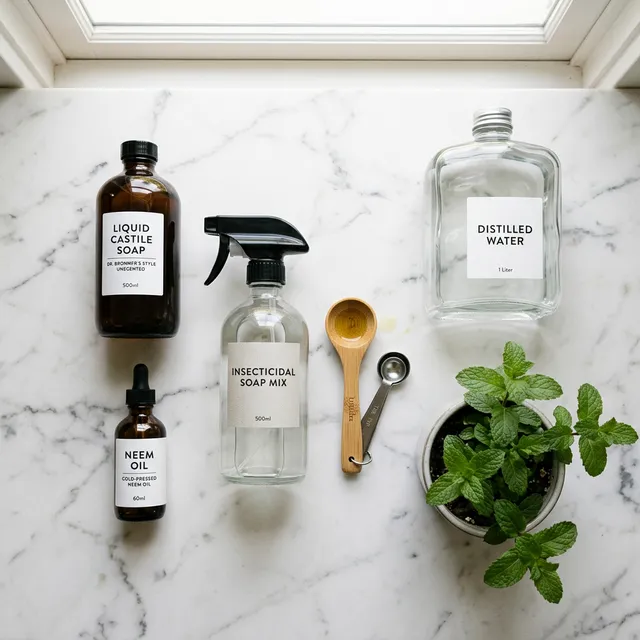
How to Make Insecticidal Soap at Home
Core 3-ingredient method: 1 tablespoon unscented castile per quart, leaf-underside coverage, and the mixing mistakes that burn plants.
 guides
When to Spray Insecticidal Soap for Best Results
Timing is everything with insecticidal soap. Learn the best time of day, season, and growth stage to spray for maximum pest control.
 guides
Insecticidal Soap Not Working? 8 Fixes
Your insecticidal soap spray isn't killing pests? Here are the 8 most common reasons it fails and exactly how to fix each one.