How to Make Insecticidal Soap at Home
Garden Soap Team
· Updated February 19, 2026 · 8 min read
Most first batches go wrong the same way: too much soap. Three tablespoons per quart will kill aphids — and it will also crisp tomato leaves. University IPM pages keep repeating the same lesson: the recipe matters less than the ratio. Get the concentration right and you kill pests without hurting plants. Get it wrong and you damage both.
Here is the core 3-ingredient method the Garden Soap Team publishes first — extension-guided ratios, not an in-house test garden.
This page is the core 3-ingredient method — soap, water, bottle — plus the six application steps we teach first. For expanded 0.5% / 1% / 2% ratio tables and a 48-hour patch-test checklist, use How to Make Insecticidal Soap at Home: Complete DIY Recipe. For a recipe-card layout (batch table, Q&A headings, printable ratios), use How to Make a DIY Insecticidal Soap Recipe. The kitchen card lives at Basic Castile Insecticidal Soap Spray.
What You’ll Need
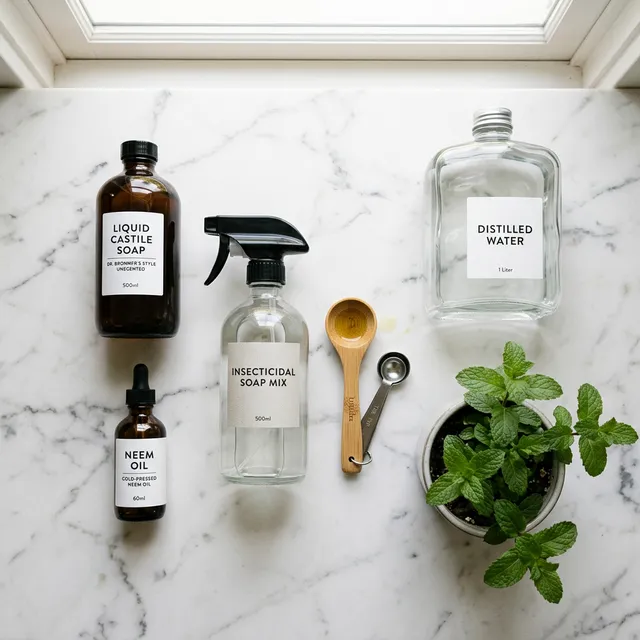
The beauty of homemade insecticidal soap is its simplicity. You only need three ingredients:
- Pure liquid castile soap — start with unscented liquid castile such as Dr. Bronner’s Unscented Baby-Mild. The peppermint version works too, but unscented is safer for sensitive plants. (Why castile? Read our soap selection guide)
- Water, distilled or rainwater is ideal. Tap works in a pinch, but hard water reduces effectiveness (more on this below).
- A spray bottle, a 32 oz glass spray bottle works well for most gardens. For larger gardens, use a 1-gallon pump sprayer.
Optional add-in: 1 teaspoon of vegetable oil (pure neem oil preferred) for improved leaf adhesion.
The Basic Recipe
Mix 1 tablespoon of pure liquid castile soap per 1 quart (4 cups) of water. That’s a roughly 1% concentration, the sweet spot recommended by the University of California IPM Program.
For heavy infestations, use 2 tablespoons per quart (roughly 2%), but always patch-test first. Above 2%, you risk phytotoxicity.
Step-by-Step Instructions
Step 1: Choose Your Soap
This is the most important decision. Your soap must be:
- Pure, no degreasers, fragrances, or moisturizers
- Liquid, bar soap can work but requires grating and melting, and it’s harder to get a consistent concentration
- Castile-based, made from plant oils (olive, coconut, hemp)
Avoid anything labeled “antibacterial,” “ultra,” or “with moisturizers.” These contain additives that harm plants. The detailed soap comparison guide has the full breakdown.
Step 2: Prepare Your Water
This step gets overlooked, but water quality genuinely matters. Hard water contains calcium and magnesium ions that react with soap to form insoluble salts, the same stuff that creates soap scum in your shower. On plants, these salts:
- Reduce pest-killing effectiveness, less active fatty acid available
- Leave white residue on leaves, blocks photosynthesis
- Clog spray nozzles, frustrating during application
Desk note: Use distilled water or collected rainwater. If you must use tap, add 1 teaspoon of white vinegar per quart to partially neutralize mineral content. Soft water is a chemistry choice, not a personal rain-barrel story.
Step 3: Mix the Solution
- Fill your spray bottle with water (leave room for soap)
- Add soap, pour slowly to avoid excessive sudsing
- Gently swirl to combine, don’t shake vigorously; excessive foam makes even spraying difficult
Step 4: Test First
Always test before full application. Spray a few leaves and wait 24 hours. If you see any yellowing, wilting, or brown spots, dilute the solution further.
Plants particularly sensitive to insecticidal soap include jade, sweet peas, bleeding hearts, hairy-leaved herbs like borage, and some young tomato varieties. See our complete plant sensitivity guide.
Step 5: Apply
- Spray both sides of leaves, pests hide underneath, and that’s often where the densest colonies form
- Apply until leaves are dripping wet, the soap must make direct, thorough contact to work
- Target clusters of visible pests first, then spray surrounding foliage as a preventive buffer
- Spray in early morning or late evening, this protects pollinators and avoids leaf-burn from sun hitting wet foliage
Step 6: Reapply
Insecticidal soap has no residual effect, it only kills on contact while wet. Once it dries (usually within 30-60 minutes), it’s completely inert. New pests that arrive afterward are unaffected.
Plan to reapply every 4-7 days until the infestation is under control. During peak aphid season (late spring in most regions), extension timing notes typically call for a weekly preventive spray.
Why It Works
Insecticidal soap works by dissolving the waxy outer coating (cuticle) of soft-bodied insects. The potassium salts of fatty acids in castile soap are amphiphilic, they break down both water-based and oil-based barriers. Without this protective cuticle layer, the insect rapidly dehydrates and dies, typically within hours of contact.
This mechanism is why insecticidal soap targets:
- 🟢 Aphids
- 🟢 Whiteflies
- 🟢 Spider mites
- 🟢 Mealybugs
- 🟢 Thrips
- 🟢 Scale (crawler stage)
And is ineffective against hard-shelled insects like beetles, which have thick exoskeletons the soap can’t penetrate. For more on the science, read What Is Insecticidal Soap and How Does It Work?
Common Mistakes
These are the errors extension pages and gardener reports flag most often:
- Using dish soap instead of castile. Dawn, Ajax, and Palmolive are detergents, they strip plant wax along with insect wax. You’ll kill the pests but stress the plant.
- Mixing too strong. “If 1 tablespoon works, 3 must work better”, no. You’ll burn leaves. Stick to 1-2 tbsp per quart.
- Spraying at noon in summer. Water droplets magnify sunlight. Combined with soap stripping some protective wax, midday spraying in hot weather guarantees leaf burn.
- Only spraying the top of leaves. Flip them over, that’s where the pests are. If you only spray the tops, you’re wasting solution.
- Giving up after one spray. Insecticidal soap has no residual effect. Eggs hatch, new pests fly in. Plan for 3-4 applications minimum.
Pro Tips
- Use soft water, hard water minerals react with soap and reduce effectiveness
- Add 1 tsp vegetable oil for extra sticking power (neem oil adds pest-fighting properties). See our insecticidal soap vs neem oil comparison for when to use each.
- Don’t use detergent, household dish detergent (especially Dawn Ultra) contains chemicals that damage plants
- Store in a cool, dark place, and mix only what you will spray today. Diluted homemade soap is not a shelf-stable product — does homemade insecticidal soap expire covers concentrate vs leftover mix.
- Label your bottle, sounds obvious, but when you have multiple garden sprays, you don’t want to mix them up
Listing checks before you buy
Amazon titles for “castile soap” and “garden sprayer” do not tell you if the bottle is safe on leaves. These are the Garden Soap Team label checks — not a product test.
- Unscented, true soap: The label should say unscented liquid castile (or potassium salts of fatty acids). Skip “ultra,” antibacterial, moisturizing, or dish-soap listings. The soap selection guide lists what to avoid.
- Soft water: Distilled or rainwater. Hard tap water locks up fatty acids. If you will not buy distilled water, a labeled concentrate from the buying guide is the more forgiving spend.
- Bottle size vs mix: A 32 oz trigger is enough for a few plants. Mix 1 tablespoon of soap per quart (about 1%). Do not “boost” the mix because a listing looks stronger.
- Optional oil: Cold-pressed neem is an add-in for adhesion, not a substitute for coverage. Compare mechanisms on insecticidal soap vs neem oil.
- Kitchen card vs walkthrough: This page is the 3-ingredient method. The basic castile recipe card is the ingredients-sidebar version. Expanded ratios live in the complete DIY recipe.
Ready for a specific recipe? Start with the Basic Castile Insecticidal Soap Spray, the kitchen card the Garden Soap Team points to first. For the expanded ratio tables and patch-test checklist, use how to make insecticidal soap at home. For indoor houseplant pests, see our indoor-specific guide.
Frequently Asked Questions
What soap should I use for insecticidal soap? ▼
Use pure liquid castile soap (like Dr. Bronner's) or pure liquid dish soap without degreasers, fragrances, or antibacterial agents. Dawn Original works but avoid Dawn Ultra or scented varieties.
Will insecticidal soap kill beneficial insects? ▼
Insecticidal soap only works on direct contact and dries quickly. It can harm beneficial insects if sprayed directly on them, so apply in early morning or evening when pollinators are less active.
How often should I spray insecticidal soap? ▼
Apply every 4-7 days for active infestations. For prevention, spray every 2 weeks. Always reapply after rain.
Can insecticidal soap burn plants? ▼
Yes, some plants are sensitive. Always test on a small area first and wait 24 hours. Avoid spraying in direct sunlight or when temperatures exceed 90°F (32°C).
 ✓
✓ The Garden Soap Team writes every recipe and guide on this site. Formulas follow published horticultural guidance — university extension resources, the UC IPM program, and OMRI standards — and we cross-check concentrations and plant-safety warnings against documented gardener experience before publishing. No harsh chemicals, no guesswork passed off as expertise.
📚 Related Articles
guidesHow to Make Insecticidal Soap at Home: Complete DIY Recipe
Expanded 0.5% / 1% / 2% mix tables and a 48-hour patch test. When castile is enough, and why hard tap water wrecks a batch.
guidesHow to Make a DIY Insecticidal Soap Recipe: Specific Benefits
Recipe-card ratios for aphids and spider mites: 1 tbsp castile per quart of distilled water, plus the rinse window that limits leaf burn.
 recipes
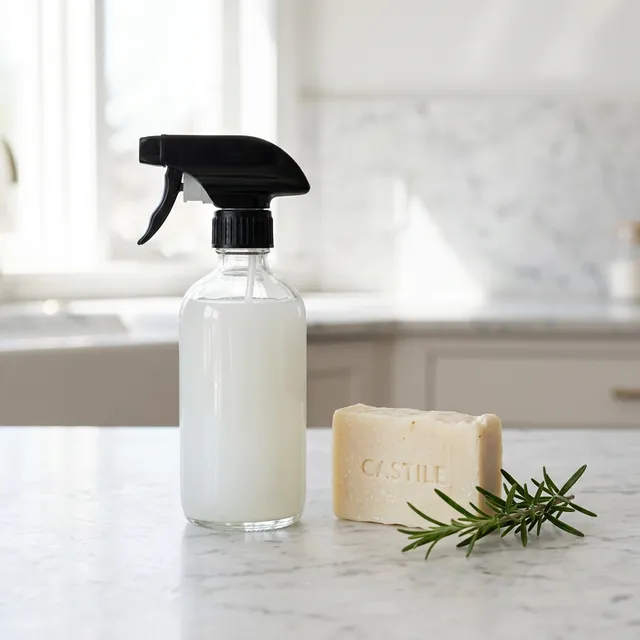
Basic Castile Insecticidal Soap Spray
The simplest and most effective homemade insecticidal soap recipe using pure castile soap. Works on aphids, whiteflies, and spider mites.