Basic Castile Insecticidal Soap Spray
The simplest and most effective homemade insecticidal soap recipe using pure castile soap. Works on aphids, whiteflies, and spider mites.
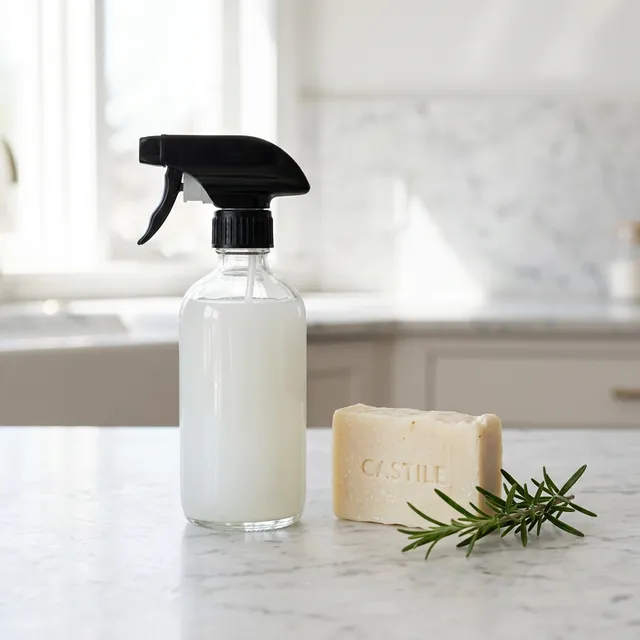
This is the kitchen-card recipe the Garden Soap Team publishes first — the same 1 tablespoon per quart ratio as the how-to walkthrough. It takes less time to mix than it does to boil water for tea, and it is the formula extension pages keep pointing at for aphids, whiteflies, and spider mites.
Recipe-card page. This is the ingredients-sidebar kitchen version. The core 3-ingredient method walkthrough is How to Make Insecticidal Soap at Home. Expanded ratios and the 48-hour patch-test live in How to Make Insecticidal Soap at Home: Complete DIY Recipe. The Q&A recipe-card guide is How to Make a DIY Insecticidal Soap Recipe.
Skip the math: the Insecticidal Soap Dilution & Mixing Calculator scales this recipe (1 tablespoon of castile soap per quart) to any bottle, quart, gallon, or 2-gallon sprayer — and checks your plant’s sensitivity before you spray.
Why Castile Soap (Not Dish Soap)
Before we mix anything, let’s talk about why this card is insistent on castile soap and not the dish soap your neighbor swears by.
Castile soap is made from plant-based oils, traditionally olive oil, though modern versions blend in coconut, hemp, and jojoba. When dissolved in water, it creates potassium salts of fatty acids, which is the actual active ingredient that kills pests. This is the same compound in commercial insecticidal soap products like Safer Brand.
Dish soap (Dawn, Ajax, Palmolive) is a synthetic detergent, not true soap. It contains surfactants, degreasers, dyes, and fragrances designed to cut grease on your dinner plates. On plant leaves, those same degreasers strip away the natural waxy cuticle that protects the leaf from sun and water loss. Extension pages and gardener reports keep repeating the same Dawn-at-midday failure: pepper and tomato leaves can crisp within a day or two.
Bottom line: castile soap kills bugs; dish soap kills bugs and your plants. If you are still deciding which bottle to buy, read the best soap for insecticidal spray.
Instructions
1. Prepare your spray bottle
Use a clean 1-quart spray bottle. If reusing an old bottle, rinse it three or four times with clean water, any chemical residue from cleaning products can react badly with soap and damage foliage. Keep a dedicated spray bottle labeled “SOAP” so there is never any confusion.
2. Add water first
Fill the bottle with distilled or rainwater. Soft water is a chemistry choice: hard tap water locks up fatty acids and leaves a chalky film.
Why does water type matter? Tap water, especially in areas with hard water, contains calcium and magnesium ions that react with soap to form insoluble curds (the same white film you see on shower doors). These curds reduce the spray’s effectiveness and can leave chalky residue on leaves. If you must use tap, add a teaspoon of white vinegar to soften it.
3. Add the soap
Pour in 1 tablespoon of pure liquid castile soap. Dr. Bronner’s Unscented Baby-Mild is the common unscented bottle for this ratio. The peppermint version adds a mild insect-repelling bonus from the menthol, but some sensitive plants don’t love essential oils, so unscented is the safer all-purpose choice.
4. Optional: Add vegetable oil
A teaspoon of vegetable oil (canola, soybean, or neem) helps the spray stick to leaf surfaces and suffocate pests more effectively. Neem oil is the add-in the Garden Soap Team lists first here — azadirachtin disrupts insect feeding and reproduction while also improving adhesion.
If you add oil, give the bottle an extra gentle swirl before each spray since oil and water separate quickly.
5. Mix gently
Swirl the bottle gently to combine. Don’t shake vigorously, you want minimal suds. Excess foam makes it harder to spray evenly and can clog your nozzle. A few slow figure-eight tilts is all it takes.
6. Spray and conquer
Here’s where technique matters as much as the recipe:
- Coat both sides of affected leaves until dripping, pests cluster on undersides where you can’t easily see them
- Focus on visible pest clusters first, then spray surrounding foliage as a preventive ring
- Apply in early morning or late evening, this protects pollinators (bees are less active) and prevents the sun from burning wet leaves. When to spray insecticidal soap has the temperature and rain rules.
- Reapply every 4-7 days as needed; soap has zero residual effect once it dries
Why This Recipe Works
Castile soap is made from plant-based oils (olive, coconut, hemp) that produce potassium salts of fatty acids, the same active ingredient in commercial insecticidal soaps. The fatty acids dissolve the waxy cuticle of soft-bodied insects, causing fatal dehydration within hours.
This mechanism is why insecticidal soap works brilliantly on aphids, whiteflies, and mealybugs but doesn’t affect hard-shelled beetles or caterpillars, their thick exoskeletons resist the soap entirely.
Common Mistakes to Avoid
These are the mistakes extension pages and gardener reports flag most often:
- Too much soap. More isn’t better. Above 2% concentration, you risk phytotoxicity, the soap starts damaging plant cells. Stick to 1 tablespoon per quart.
- Spraying in full sun. Water droplets act like tiny magnifying glasses. Combined with soap stripping some wax from leaves, midday applications can cause serious leaf burn.
- Expecting one spray to fix everything. Insecticidal soap only kills on contact. New pests hatch, fly in from neighbors’ yards, or emerge from egg clusters. Plan for 3-4 weekly applications during active infestations.
- Skipping the patch test. Even castile soap can stress certain plants, especially those with hairy or delicate leaves. Always spray 2-3 leaves and wait 24-48 hours before treating the whole plant.
Storage
Store unused solution in a cool, dark place. Treat a mixed bottle as a same-day spray — leftover dilution separates and weakens. Does homemade insecticidal soap expire explains why you store the concentrate, not the leftover mix. Mix a fresh batch during peak pest season rather than parking a quart in the shed.
For the dry ingredients, store your castile soap bottle away from direct sunlight with the cap tightly sealed. It’ll last a year or more.
What’s Next
Listing checks before you buy
The kitchen card only works if the bottle is unscented castile and the water is soft. These are Garden Soap Team label checks — not a product test.
- Label: Unscented liquid castile. Peppermint or tea-tree versions add oils that scorch sensitive plants. See best soap for insecticidal spray.
- Water: Distilled or rainwater. Hard tap water makes scum and a white leaf film.
- Ratio: 1 tablespoon per quart. More soap burns leaves; it does not kill more pests. Confirm the walkthrough on How to Make Insecticidal Soap at Home.
- Walkthrough vs card: Method steps live on the core how-to. Ratio tables are on the complete DIY recipe.
Once you’ve mastered this basic recipe, try adding neem oil for extra pest-fighting power, garlic and pepper for stubborn infestations, or our tomato leaf soap spray for a plant-based alternative. For broader organic options beyond soap, see our natural pesticides for vegetable gardens guide.
 ✓
✓ The Garden Soap Team writes every recipe and guide on this site. Formulas follow published horticultural guidance — university extension resources, the UC IPM program, and OMRI standards — and we cross-check concentrations and plant-safety warnings against documented gardener experience before publishing. No harsh chemicals, no guesswork passed off as expertise.
📚 Related Articles
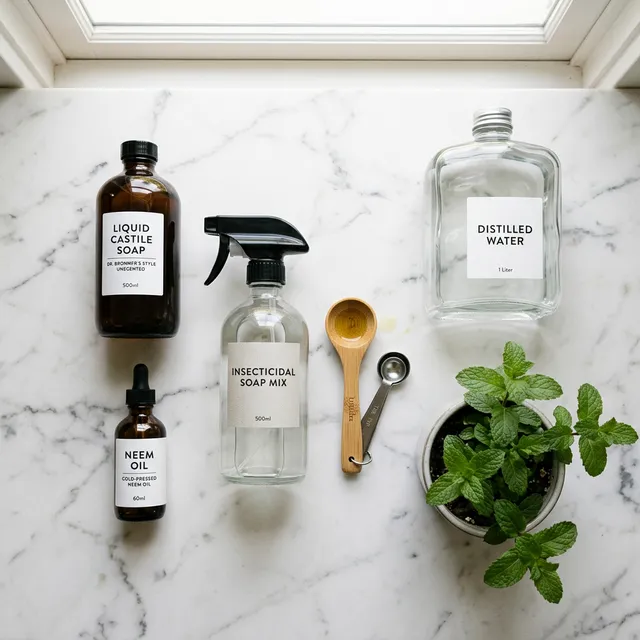 guides
How to Make Insecticidal Soap at Home
Core 3-ingredient method: 1 tablespoon unscented castile per quart, leaf-underside coverage, and the mixing mistakes that burn plants.
guidesHow to Make Insecticidal Soap at Home: Complete DIY Recipe
Expanded 0.5% / 1% / 2% mix tables and a 48-hour patch test. When castile is enough, and why hard tap water wrecks a batch.
guidesHow to Make a DIY Insecticidal Soap Recipe: Specific Benefits
Recipe-card ratios for aphids and spider mites: 1 tbsp castile per quart of distilled water, plus the rinse window that limits leaf burn.