Insecticidal Soap for Aphids
Garden Soap Team
· 8 min read
Why Aphids Are the Perfect Target for Insecticidal Soap
Aphids are soft-bodied, slow-moving, and cluster in exposed locations on your plants. That combination makes them ideal targets for insecticidal soap, which works by dissolving soft insect membranes on direct contact. No hard shell to penetrate, no fast escape, and colonial behavior means one spray pass can hit hundreds of individuals.
A single female aphid can produce 50-80 offspring in her lifetime without mating (parthenogenesis), and those offspring begin reproducing within 7-10 days. That’s why speed matters. Every day you wait, the population roughly doubles.
Identifying Aphids on Your Plants
Before you spray, confirm you’re actually dealing with aphids:
What aphids look like:
- Tiny (1-3mm), pear-shaped insects
- Green, black, yellow, red, or white depending on species
- Cluster on new growth, stem tips, and leaf undersides
- Some have wings (reproductive adults migrating to new plants)
Signs of aphid damage:
- Curled or distorted new leaves
- Sticky residue on leaves below colonies (honeydew, their excrement)
- Black sooty mold growing on honeydew
- Ants marching up stems (they farm aphids for honeydew)
- Stunted growth on young plants
If you see ants running up and down your plant stems, follow them. They’ll lead you straight to the aphid colony.
The Best Insecticidal Soap Recipe for Aphids
Aphids are soft enough that the basic castile soap spray works well. No need for stronger recipes unless you’re dealing with a heavy infestation.
Standard Recipe
- 1 tablespoon pure liquid castile soap like Dr. Bronner’s Unscented (unscented)
- 1 quart water (distilled or rainwater preferred)
- Optional: 1 teaspoon vegetable oil for improved coverage
For Heavy Infestations
- 2 tablespoons castile soap per quart
- Add 1 teaspoon neem oil for residual protection
- Apply every 3-4 days instead of weekly
Mix the soap into water gently. Aggressive shaking creates foam that clogs spray nozzles. Choose the right soap to avoid plant damage.
How to Spray Aphids Effectively
Step 1: Target the Colonies
Aphids don’t spread evenly across your plant. They concentrate on:
- Growing tips where tissue is soft and sap flows freely
- Leaf undersides where they’re sheltered from rain and predators
- Flower buds where nutrients are concentrated
- Where stems meet leaves (axils)
Spray these areas first and most thoroughly.
Step 2: Achieve Full Contact
Insecticidal soap only kills aphids it touches directly. Once it dries, it has zero residual effect. This means:
- Spray until the liquid drips off leaves
- Flip leaves to hit the undersides
- Twist the spray bottle angle to reach into plant crevices
- Spray the stem from top to bottom
Step 3: Time It Right
When to spray matters as much as what you spray:
- Best time: Early morning (6-9 AM) when aphids are sluggish and temperatures are cool
- Acceptable: Late evening after pollinators are inactive
- Avoid: Midday heat, which increases phytotoxicity risk
Step 4: Follow-Up Applications
| Application | Timing | Purpose |
|---|---|---|
| First spray | Day 1 | Kill visible adults and nymphs |
| Second spray | Day 5-7 | Catch newly hatched nymphs |
| Third spray | Day 10-14 | Break the reproduction cycle |
| Monitoring | Weekly | Watch for re-infestation |
Three applications is the minimum. Continue weekly monitoring and spot-treat any new colonies immediately.
Common Aphid Species and Soap Effectiveness
| Aphid Type | Color | Common Targets | Soap Effectiveness |
|---|---|---|---|
| Green peach aphid | Light green | Peppers, tomatoes, peaches | Excellent |
| Black bean aphid | Black | Beans, beets, nasturtiums | Excellent |
| Woolly aphid | White/grey | Apple trees, elms | Good (extra applications needed) |
| Rose aphid | Green/pink | Roses, ornamentals | Excellent |
| Cabbage aphid | Gray-green | Brassicas (kale, broccoli) | Good |
| Root aphid | White | Underground, various crops | Poor (soap can’t reach them) |
Root aphids are the one exception. Since they live underground, soap spray can’t reach them. For root aphids, consider a soil drench with neem oil mixed at a lower concentration.
Physical Removal First
Before reaching for the spray bottle, try physical removal for small infestations:
- Strong water blast. A sharp stream of water from your garden hose knocks aphids off plants. Most can’t climb back. This alone handles minor infestations.
- Pruning. If aphids are concentrated on a few shoots, just prune those shoots and dispose of them in a sealed bag.
- Squish them. Wearing gloves, run your fingers along infested stems and crush the colonies. Not glamorous, but effective.
Use insecticidal soap when physical methods aren’t keeping up with the population growth. For the full natural-control stack — water blast, beneficials, and companions — see how to get rid of aphids naturally.
Protecting Beneficial Insects
Aphids attract natural predators that provide ongoing, free pest control:
- Ladybugs eat 50-60 aphids per day
- Lacewing larvae (“aphid lions”) are voracious predators
- Parasitic wasps lay eggs inside aphids (look for swollen brown “mummies”)
- Hoverfly larvae eat aphids near plant bases
To protect these allies:
- Spray only when beneficial insects are not present
- Avoid broad-coverage sprays when predators are actively feeding
- Accept some aphids as food supply for beneficial populations
- Plant flowers nearby (yarrow, dill, fennel) to attract predators. How to attract beneficial insects covers habitat that keeps ladybugs and lacewings on-site.
The goal is management, not total eradication. A few aphids feeding your beneficial insect population is better than a sterile garden that’s vulnerable to the next infestation.
When Soap Spray Isn’t Enough
If you’ve done 4+ applications and aphids keep returning in force, consider these escalation steps:
- Add neem oil to your soap spray for systemic protection
- Address the ant problem. Ants actively protect aphid colonies from predators. Use diatomaceous earth or ant bait stations near the plant base.
- Check for root aphids. If above-ground treatment isn’t working, the infestation may be coming from below soil level. A pre-emulsified neem oil concentrate works well for soil drenches.
- Diversify your approach. Read our integrated pest management guide for a multi-pronged strategy.
- Consider companion planting. Certain plants repel bugs naturally and can reduce aphid pressure over time.
Prevention
The best aphid management is making your garden less attractive to them:
- Avoid over-fertilizing. Excess nitrogen produces the tender new growth aphids prefer
- Inspect new plants. Quarantine nursery purchases for a week before planting
- Encourage diversity. Mixed plantings confuse pests; monocultures invite them
- Maintain plant health. Healthy, well-watered plants resist and recover from aphid damage faster
- Remove overwintering sites. Clear plant debris in fall where aphid eggs survive winter
Listing checks before you buy
The listing will not tell you if last week’s spray missed the underside. These are Garden Soap Team checks.
- When DIY is enough: Soft-bodied aphids on a handful of plants are a kitchen castile mix. Buy a labeled bottle when you want potassium-salt consistency without measuring.
- Soft water vs hard water: Hard water locks up fatty acids and leaves white film on leaves you already coated. Distilled water is cheaper than a second concentrate.
- Plant sensitivity: Peppers, stressed transplants, and hairy herbs still need a 24–48 hour patch test. “Gentle” RTU is easy to over-apply.
- Concentration: Stay near 1% (1 tablespoon soap per quart). Aphids that return need another coverage pass and a 5–7 day repeat, not a hotter mix. Root aphids need a soil tool — a pre-emulsified neem drench, not more foliar soap.
Frequently Asked Questions
Does insecticidal soap kill aphids? ▼
Yes. Insecticidal soap is one of the most effective organic treatments for aphids. The potassium salts of fatty acids dissolve the aphid's soft body membrane, causing dehydration and death within minutes of direct contact.
How long does it take insecticidal soap to kill aphids? ▼
Aphids sprayed directly with insecticidal soap die within 1-2 hours. You'll see them stop moving within minutes as the soap disrupts their cell membranes. However, soap only kills on contact so thorough coverage is essential.
How often should I spray insecticidal soap for aphids? ▼
Spray every 5-7 days for at least 3 applications. This catches newly hatched nymphs that weren't present during the first spray. A single application rarely eliminates an infestation because aphids reproduce extremely fast.
Will insecticidal soap kill ladybugs? ▼
Insecticidal soap can harm ladybugs on direct contact. Spray early morning when ladybugs are less active, and avoid spraying if you see ladybugs actively feeding on aphids. Once the soap dries, it poses no risk to beneficial insects.
 ✓
✓ The Garden Soap Team writes every recipe and guide on this site. Formulas follow published horticultural guidance — university extension resources, the UC IPM program, and OMRI standards — and we cross-check concentrations and plant-safety warnings against documented gardener experience before publishing. No harsh chemicals, no guesswork passed off as expertise.
📚 Related Articles
guidesHow to Get Rid of Aphids Naturally
Water blast first, then 1% castile on colonies, then neem if they return. Why aphids rebound after one spray — and how to break the cycle.
 guides
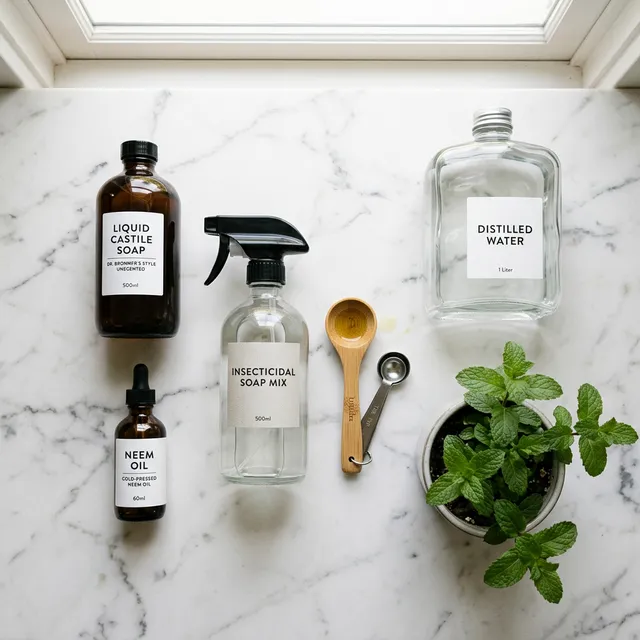
How to Make Insecticidal Soap at Home
Core 3-ingredient method: 1 tablespoon unscented castile per quart, leaf-underside coverage, and the mixing mistakes that burn plants.
 recipes
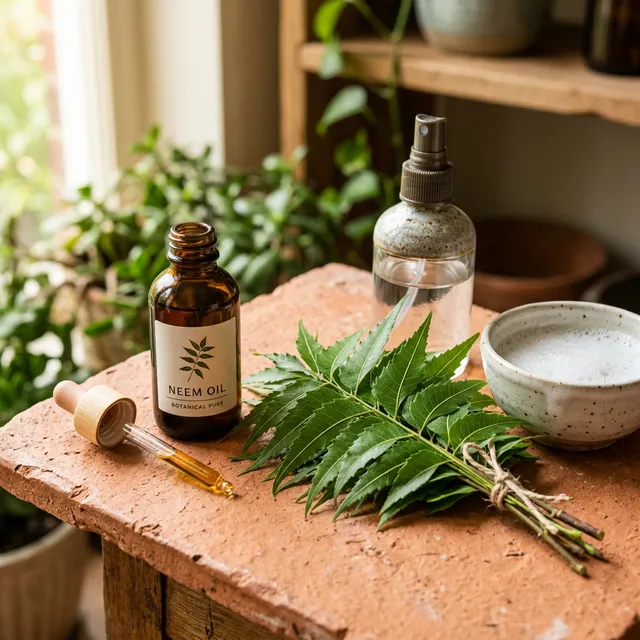
Neem Oil Insecticidal Soap Spray
Soap knocks pests down; neem adds a few days of feeding disruption. Mix ratios, evening timing, and when plain castile is still enough.