Best Insecticidal Soap: 5 Top Brands Compared
Garden Soap Team
· 8 min read
This comparison is how the Garden Soap Team reads labels, OMRI listings, and gardener-report patterns — not a decade of in-house brand trials. Some bottles are worth the money. Some are convenience markup.
Garden Soap Team buying notes
These notes are how we decide whether to buy a bottle — not a restatement of the Amazon listing.
- When DIY is enough: Soft-bodied pests on a handful of plants, and you already have unscented castile soap, are a kitchen-mix job. A $12 bottle of castile soap makes 30–60 quarts. Buy a commercial concentrate when you want labeled potassium-salt consistency, you spray weekly on a large bed, or you do not want to think about water chemistry.
- Soft water vs hard water: Homemade castile + hard tap water forms scum and weakens the mix. Commercial soaps are formulated to tolerate municipal water better. If your kettle scales up, either buy distilled water for DIY or lean toward a labeled concentrate.
- Plant sensitivity: Ferns, succulents, hairy herbs, and stressed transplants still need a 24–48 hour patch test — even with a “gentle” ready-to-use. RTU bottles make it easy to over-apply; a concentrate you measure is easier to keep at 1%.
- Concentration: Stay near 1% (about 1 tablespoon soap per quart). Do not “boost” a commercial mix past the label because a brand looks stronger. Above ~2% you buy phytotoxicity, not more kill.
Side-by-Side Comparison (2026)
| Product | Format | Price | Organic | Best For | Key Pro |
|---|---|---|---|---|---|
| Safer Brand Concentrate | Concentrate | ~$12 | ✅ OMRI | Budget, large gardens | Makes 6+ gallons |
| Natria RTU | Ready-to-use | ~$8 | ✅ | Indoor plants, quick sprays | Zero mixing required |
| Bonide Captain Jack’s | Ready-to-use | ~$15 | ✅ | Mealybugs, scale, tough pests | Dual-action formula |
| Garden Safe | Ready-to-use | ~$7 | ✅ | First-time users | Widely available in stores |
| Espoma Organic | Ready-to-use | ~$10 | ✅ | Sensitive gardeners | Plant-derived oils only |
Quick Pick: Best Overall
For most gardeners, Safer Brand Insect Killing Soap Concentrate is the best value. OMRI-listed, effective, and the concentrate format means you’re not paying to ship water.
But it’s not the right choice for everyone. Read on for the full comparison.
Our Top 5 Insecticidal Soaps
1. Safer Brand Insect Killing Soap Concentrate ⭐ Best Value
Check price on Amazon →Active ingredient: Potassium salts of fatty acids (49.52%)
Pros:
- OMRI-listed for organic gardening
- Concentrate means excellent value, one bottle makes 6+ gallons
- Works on aphids, mealybugs, whiteflies, spider mites, and thrips
- Zero-day pre-harvest interval
Cons:
- Requires mixing (not grab-and-spray)
- Concentration instructions on the label could be clearer
Best for: Budget-conscious gardeners with multiple plants to treat. If you spray regularly throughout the season, concentrate is always more economical than ready-to-use.
2. Natria Insecticidal Soap (Ready-to-Use)
Check price on Amazon →Active ingredient: Potassium salts of fatty acids
Pros:
- Grab and spray, no mixing required
- Fast-acting formula
- Works on both indoor and outdoor plants
- Can be used on flowers, fruits, and vegetables
Cons:
- More expensive per quart than concentrate
- You’re paying to ship water
- Bottle size limits coverage area
Best for: Indoor gardeners with a few houseplants, or gardeners who want zero-hassle application for spot treatments.
3. Bonide Captain Jack’s Insecticidal Super Soap
Check price on Amazon →Active ingredient: Potassium salts of fatty acids (dual-action formula)
Pros:
- Dual-action formula for stubborn pests
- Effective against mealybugs and scale insects (harder-to-kill pests)
- Approved for organic gardening
- Works as contact killer and suffocant
Cons:
- Pricier than standard formulas
- Overkill for basic aphid problems
Best for: Gardeners dealing with tough pests that standard soap sprays haven’t handled, mealybugs, scale, and persistent whitefly infestations.
4. Garden Safe Insecticidal Soap Insect Killer
Active ingredient: Potassium salts of fatty acids
Pros:
- Widely available in big-box stores
- Organic formulation
- Safe for use up to harvest day
- Affordable ready-to-use option
Cons:
- May need multiple applications for heavy infestations
- Can stress sensitive plants with repeated use
Best for: First-time users who want an affordable, widely available option from their local hardware store.
5. Espoma Organic Insecticidal Soap
Active ingredient: Plant oil-based potassium salts of fatty acids
Pros:
- Made from plant oils (no animal-based fatty acids)
- Ready-to-use spray format
- Effective against mites, whiteflies, and other soft-bodied pests
- Good for sensitive gardeners (hypoallergenic formulation)
Cons:
- Often requires 2-3 applications
- Harder to find than Safer Brand or Garden Safe
Best for: Organic purists who want a plant-derived formula free from animal-based ingredients.
The DIY Alternative
All of these commercial products use the same active ingredient you can create at home: potassium salts of fatty acids. Pure castile soap + water gives you the exact same chemistry at a fraction of the cost.
A $12 bottle of Dr. Bronner’s castile soap makes 30-60 quarts of spray, roughly $0.20/quart vs $3-5/quart for commercial products.
See our homemade vs commercial comparison for the full breakdown, or jump straight to our Basic Castile Soap Spray recipe. Shopping the bottle, sprayer, and extras at once? Use the insecticidal soap buying guide.
How to Apply Any Insecticidal Soap
Regardless of which brand you choose, the application technique is the same:
- Spray leaf undersides, that’s where 90% of pests live
- Coat until dripping, the soap must make direct contact
- Apply early morning or evening, avoid midday heat
- Reapply every 4-7 days, soap has zero residual effect
- Patch test first, even commercial products can stress sensitive plants
For more details, read our complete application guide. Timing windows (morning vs evening vs heat) live on when to spray insecticidal soap.
How to mix and use a commercial bottle
A store bottle is still a 1% fatty-acid film. The label is the rate. Do not “boost” Safer Brand, Natria, or a Super Soap because a review said it looked weak.
Concentrate (Safer Brand and similar):
- Read the ornamental vs edible rate on this bottle. Rates shift by brand and by crop.
- Measure into a dedicated sprayer first, then add water. Soap-first cuts foam.
- Use the labeled volume of water — usually in the 1–2% potassium-salt window, which is about 1 tablespoon of kitchen castile per quart, not an excuse to pour extra concentrate.
- Swirl. Do not shake. Foam clogs brass tips and makes you think the mix is “stronger.”
- Spray until leaf undersides drip. Light misting is a missed colony.
- Use the tank the same day. Diluted commercial soap is not a leftover you store until Saturday.
Ready-to-use: shake the bottle, set a fine mist, and treat it as already at rate. The failure mode is over-applying — holding the trigger until the leaf is soaked in a puddle. RTU is convenient, not gentler.
If you are mixing kitchen castile instead, the 3-ingredient card is how to make insecticidal soap. Shopping the sprayer and water with the bottle is the buying guide.
Pests a labeled soap covers (and skips)
Potassium-salt soaps are contact tools for soft-bodied pests the droplet can wet:
- Yes, on contact: aphids, whiteflies, spider mites, mealybug crawlers, thrips adults you can reach, young scale crawlers, psyllids, lace-bug nymphs.
- Maybe, if you catch the right stage: mealybugs with cotton still need a swab plus soap; armored scale and Japanese beetles shrug off a film.
- No: slugs, snails, cabbage worms, squash bug adults, stink bug adults, cutworms in soil. Those need a different tool — Bt for caterpillars, traps or DE for slugs, hand-pick for beetles.
Stage-honest pest pages: aphids, whiteflies, spider mites, mealybugs, thrips, scale. If the listing promises “all insects,” it is selling a category, not a cuticle.
Captain Jack’s Super Soap and other dual-action bottles sometimes add oils or botanicals. That can help waxy pests. It also raises phytotoxicity and can kill more beneficials on contact. Treat those as a different product than plain potassium salts — not a stronger version of Safer Brand.
Plants, heat, and phytotoxicity on store bottles
Commercial does not mean “safe on every leaf.” The same film that opens an aphid cuticle can strip plant wax.
Skip or half-rate, even with a labeled RTU:
- Succulents and cacti (farina does not grow back)
- Ferns, especially maidenhair and Boston
- African violets and other hairy-leaved houseplants
- Seedlings under about two weeks
- Heat-stressed tomatoes, thin-leaved herbs (cilantro, dill), Japanese maple in summer
Full list and half-strength notes: plants sensitive to insecticidal soap and plant safety.
Phytotoxicity tells: yellow or bronze patches within 24–48 hours, crispy margins, sudden leaf drop. That is rate, heat, or a sensitive host — not a reason to buy a second brand of the same fatty acids.
Patch-test 24–48 hours on two leaves. Spray at dawn or after 6 PM. Do not soap a wilted plant and then water it in midday sun. If a leaf looks tired after a pass, rinse with clean water after 1–2 hours; the pests you hit are already dead.
Application timing for concentrates vs RTU
Soap has zero residual. The clock is the hatch, not the bottle.
| Situation | Interval | Note |
|---|---|---|
| Active colony (aphids, whiteflies, mites) | Every 4–7 days, at least 3 passes | Eggs and hidden nymphs miss the first spray |
| Mealybug / scale crawlers | 5–7 days while crawlers are moving | Wax and armor need a swab or oil, not a hotter mix |
| After rain or overhead watering | Respray when dry | Contact film washed off |
| Prevention | Do not soap on a calendar | Dry film does nothing; scout instead |
Morning (roughly 6–9 AM) is the default. Evening is acceptable if leaves can dry before night. Midday heat above the mid-80s °F is how gardeners buy leaf burn from a “gentle” organic bottle. Details: when to spray.
Buying criteria that are not the brand name
Read the label before the star rating.
- Format: Concentrate if you spray a bed weekly. RTU if you have two houseplants and will not mix. Shipping water is the usual RTU tax.
- Active only: “Potassium salts of fatty acids” (or potassium laurate) should be the story. Pyrethrin, sulfur, or a mystery “plus” changes beneficial-insect and harvest rules.
- OMRI / organic listing: Useful if you need a certified input. Kitchen castile is the same chemistry without the listing.
- Water: If your kettle scales, either buy distilled water for DIY or lean commercial — homemade scum is not a brand failure.
- Sprayer: A dedicated bottle with a true fine mist. Coarse jets dump rate on succulents and miss undersides. Hardware comparison: garden sprayers.
- Castile vs labeled: Same fatty acids. Kitchen mix is cheaper; labeled mix is printed rates and slightly more forgiveness in hard water. That spend decision is homemade vs commercial.
If the page still looks like five identical “kills 50+ insects” tiles, you are shopping the category, not the rate.
Storage and Shelf Life
All commercial insecticidal soaps should be stored in a cool, dry place away from direct sunlight. Concentrates like Safer Brand typically last 2-3 years unopened. Ready-to-use sprays last about 1 year once opened.
Once you dilute a concentrate, use it within 24 hours. Mixed solutions lose effectiveness quickly because the fatty acid salts begin to break down in water. Make only as much as you need for each application session. The same rule applies to kitchen batches — does homemade insecticidal soap expire covers leftover mix vs the unused concentrate.
We evaluate gardening and home guides independently. To learn more about our editorial standards, read our Editorial Policy.
Frequently Asked Questions
What is the best insecticidal soap to buy? ▼
Safer Brand Insect Killing Soap Concentrate is the best overall value — it's OMRI-listed for organic use, effective against all common soft-bodied pests, and costs less per gallon than any other commercial brand.
Is commercial insecticidal soap better than homemade? ▼
Both use the same active ingredient (potassium salts of fatty acids). Commercial products offer consistency and convenience; homemade offers lower cost and full ingredient control. See our full comparison.
Can I use insecticidal soap on vegetables? ▼
Yes. All of the products listed here are safe for use on edible plants and have a zero-day pre-harvest interval, meaning you can spray and harvest the same day.
 ✓
✓ The Garden Soap Team writes every recipe and guide on this site. Formulas follow published horticultural guidance — university extension resources, the UC IPM program, and OMRI standards — and we cross-check concentrations and plant-safety warnings against documented gardener experience before publishing. No harsh chemicals, no guesswork passed off as expertise.
📚 Related Articles
guidesBest Soap for Insecticidal Spray (and What to Avoid)
True castile vs dish detergent: unscented liquid soap at 1 tablespoon per quart. Dawn and “ultra” bottles strip leaf wax.
 guides
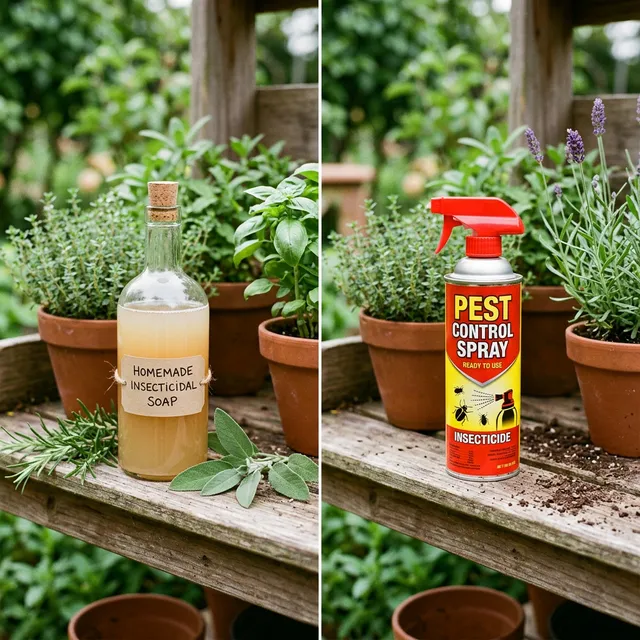
Homemade vs Commercial Insecticidal Soap
Same fatty-acid chemistry, different spend: kitchen castile vs a labeled concentrate. When mixing wins, and when a store bottle is backup.
 guides
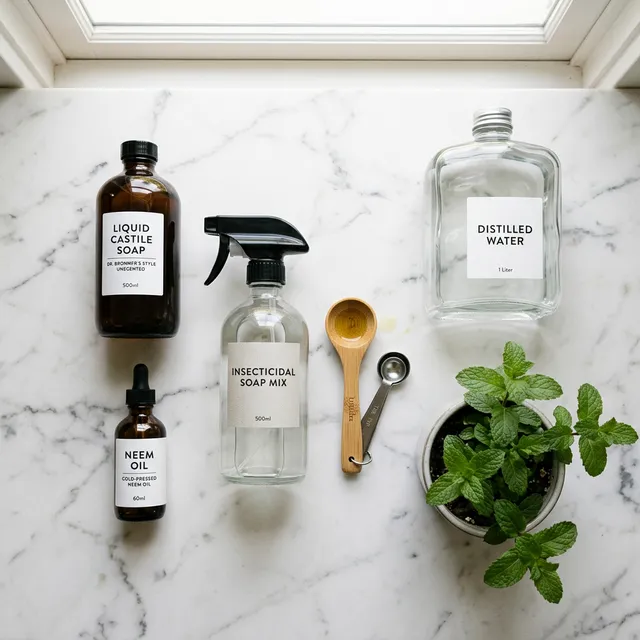
How to Make Insecticidal Soap at Home
Core 3-ingredient method: 1 tablespoon unscented castile per quart, leaf-underside coverage, and the mixing mistakes that burn plants.