Homemade vs Commercial Insecticidal Soap
Garden Soap Team
· Updated February 19, 2026 · 8 min read
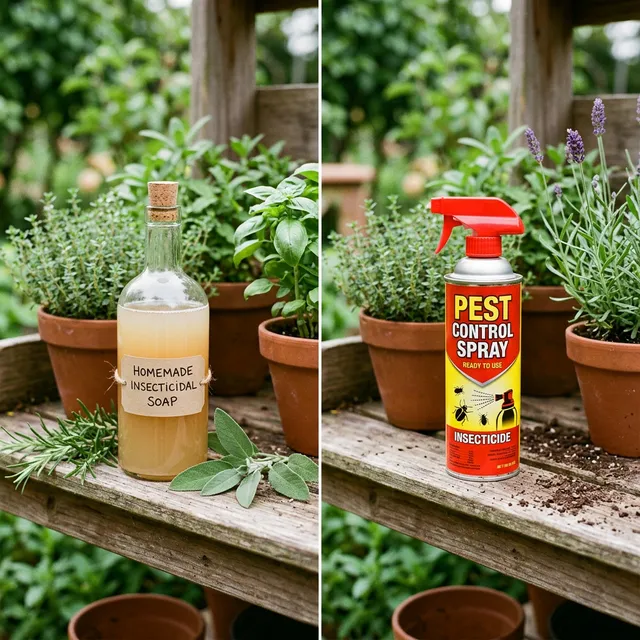
Garden Soap Team buying notes
This page is a spend decision — not a restatement of either Amazon listing.
- When DIY is enough: The active chemistry is the same potassium salts of fatty acids. If you already have unscented castile soap and will mix 1 tablespoon per quart, a store bottle is convenience. Buy a labeled concentrate when you want printed rates, you will not buy distilled water, or you need a grab-and-spray backup.
- Soft water vs hard water: Kitchen mixes fail in hard tap water (scum, white film). Commercial concentrates tolerate municipal water better. That is a water purchase, not a “stronger soap” purchase.
- Plant sensitivity: Homemade lets you drop to 0.5% on ferns and stressed transplants. Ready-to-use bottles make it easy to over-apply. Patch-test either format for 24–48 hours.
- Concentration: Do not boost a commercial mix past the label, and do not triple a kitchen mix because a listing looks stronger. Above ~2% you buy leaf burn. Shopping the bottle, sprayer, and water together is the buying guide; brand-by-brand RTU vs concentrate is the best insecticidal soaps comparison.
The Quick Comparison
| Factor | Homemade | Commercial |
|---|---|---|
| Cost per quart | $0.15-0.30 | $3-5 |
| Effectiveness | ★★★★☆ | ★★★★☆ |
| Consistency | Varies with mixing | Very consistent |
| Active ingredient | Potassium salts of fatty acids | Same + possible additives |
| Control over ingredients | Complete | None |
| Availability | Requires mixing | Ready to spray |
| Shelf life | Mix fresh each time | 2-3 years |
| Organic certified | Depends on soap used | Often OMRI-listed |
When Homemade Wins
💰 Cost
This is the clearest advantage. A 32oz bottle of Dr. Bronner’s castile soap costs about $12 on Amazon and makes 30-60 quarts of insecticidal spray. That’s roughly $0.20 per quart.
Compare that to Safer Brand Insecticidal Soap Concentrate at about $12 for a bottle that makes 6 quarts. That’s $2 per quart, 10x more expensive.
Over a growing season, a typical gardener might use 20-30 quarts:
- Homemade: $4-6 total
- Commercial: $40-60 total
🧪 Ingredient Transparency
With homemade, you know exactly what’s going on your food plants. You choose the soap, the water quality, and whether to add anything else. No hidden “inert ingredients” that companies aren’t required to disclose.
🎛️ Customization
You can adjust your recipe for specific situations:
- Lower concentration for sensitive plants
- Add neem oil for persistent pests
- Use garlic and pepper as extra deterrents
- Switch soap types for hard water areas
♻️ Environmental Impact
Homemade soap spray has a smaller environmental footprint:
- No plastic concentrate bottles
- No shipping heavy liquid products
- No factory manufacturing process
- Biodegradable ingredients you already recognize
When Commercial Wins
⏱️ Convenience
Can’t deny it, grabbing a ready-to-spray bottle is fast. No measuring, no mixing, no cleanup. For gardeners who just want to spray and go, commercial products save time.
📏 Consistency
Commercial formulations are precisely measured and pH-tested. Every bottle delivers the same concentration. If you’re not confident in your mixing, commercial products remove the guesswork.
📋 Regulatory Testing
EPA-registered insecticidal soaps have been tested for:
- Efficacy against listed pests
- Plant safety at labeled rates
- Environmental impact
- Human safety
Homemade recipes don’t undergo this testing (though the ingredients are well-studied individually).
➕ Bonus Ingredients
Some commercial formulas include additional pest-fighting compounds:
- Pyrethrin, provides knockdown power (but kills beneficial insects too)
- Neem oil extract, systemic protection
- Sulfur, also controls fungal diseases
The Science: Are They Equally Effective?
The active ingredient is the same: potassium salts of fatty acids. Whether those salts come from Dr. Bronner’s castile soap or Safer Brand concentrate, the mechanism of action is identical:
- Fatty acid salts penetrate the insect’s cuticle
- Cell membranes are disrupted
- The insect dehydrates and dies
The key variable isn’t the brand, it’s the concentration and coverage. A well-mixed homemade spray applied thoroughly is just as effective as any commercial product.
The Safety Comparison
For Plants
Both can cause phytotoxicity if:
- Concentration is too high
- Applied in extreme heat
- Used on sensitive species
Commercial products have the advantage of tested safety margins, but homemade gives you the flexibility to go even gentler.
For Beneficial Insects
Both kill beneficial insects on contact, soap doesn’t discriminate between aphids and ladybugs. The advantage of both over synthetic pesticides is that they have zero residual activity. Once dry, they’re harmless to beneficials that arrive later.
For Humans and Pets
Both are among the safest pesticide options:
- No toxic residue
- Zero-day pre-harvest interval
- Safe around children and pets once dry
- No protective equipment needed (beyond eye protection)
How to mix each format
The chemistry matches. The measuring does not.
Kitchen castile (the default spend):
- 1 tablespoon unscented liquid castile per quart of distilled or rainwater (~1%). Sensitive hosts: start at ½ tablespoon.
- Soap in the sprayer first, then water. Swirl. Do not shake.
- Patch-test 24–48 hours. Spray undersides until dripping, morning or evening.
- Mix what you will use today. Diluted homemade soap is not a leftover — shelf life.
The long method is how to make insecticidal soap; the short card is basic castile soap spray.
Labeled concentrate:
- Use the ornamental or edible rate printed on that bottle. Safer Brand and peers are still potassium salts — they are not “stronger soap.”
- Measure concentrate, then water, in a dedicated pump sprayer.
- Same coverage rules: undersides, drip, cool hours, same-day tank.
- Do not pour extra concentrate because last week’s homemade pass missed a colony. That was coverage or water hardness, not a 3% film.
Ready-to-use: already at rate. The failure mode is holding the trigger until the leaf puddles. RTU does not need a homemade “boost.”
Application timing for both bottles
Neither format leaves a killing residue. The hatch clock is the same whether the salt came from Dr. Bronner’s or Safer Brand.
| Clock | Homemade | Commercial |
|---|---|---|
| Time of day | Early morning, or evening if leaves dry | Same — labels still warn off midday heat |
| Re-entry | When dry | When dry (read the label if pyrethrin is in the mix) |
| Recheck | 4–7 days while pests are visible | Same 4–7 day hatch, not a “stronger” interval |
| Rain | Respray when dry | Same — contact film washed off |
| Heat | Skip a wilted plant in the 80s °F | Skip it. A registered bottle still burns. |
Daypart and season notes: when to spray insecticidal soap. If soap “stopped working,” the usual misses are undersides, hard water, and eggs — insecticidal soap not working.
Pests and additives: when commercial is a different tool
Plain homemade and plain commercial soap hit the same soft-bodied list: aphids, whiteflies, mites, mealybug crawlers, reachable thrips. Stage pages: aphids, whiteflies, mites.
Commercial wins a different job only when the label adds something that is not fatty acids:
- Pyrethrin — faster knockdown, also knocks beneficials and can change harvest/re-entry. That is not “better soap.”
- Neem or other oils — some residual and adhesion; more phytotoxicity in heat. You can add measured neem to a kitchen mix instead of buying the combo SKU.
- Sulfur — fungal bonus, incompatible with some oils and some hosts.
If the bottle is only potassium salts of fatty acids, you are paying for packaging, a printed rate, and slightly better hard-water behavior — not a wider pest list. Beetles, slugs, and caterpillars still need other tools from best organic pesticides.
Registration honesty: a homemade castile mix is not an EPA-registered pesticide. A labeled concentrate is. For a home garden that is a paperwork and consistency difference, not proof the kitchen mix “doesn’t work.” For anyone who needs a listed input (some market gardens, some organic certifications), the commercial bottle is the one that exists on paper.
Plants that burn on either format
Homemade is not automatically gentler. A 2% kitchen mix in noon sun will cook a fern faster than a labeled 1% RTU at dawn.
High risk on both: succulents (farina), ferns, African violets, very new seedlings, heat-stressed thin leaves. Desk list: plants sensitive to insecticidal soap.
The homemade advantage is control: you can drop to 0.5% and rinse after an hour. The commercial advantage is a tested ceiling — if you follow the label. The commercial failure is treating RTU as unlimited volume. Phytotoxicity notes: plant safety.
Our Recommendation
Start homemade, keep commercial as backup.
For most gardeners, homemade insecticidal soap is the better choice: it’s affordable, effective, transparent, and customizable. Use our Basic Castile Soap Spray recipe. If you do want a labeled bottle, compare concentrates on best insecticidal soaps instead of grabbing the first RTU listing.
Keep a bottle of commercial concentrate on hand for:
- Emergency outbreaks when you don’t have time to mix
- Travel (pre-treat plants before leaving)
- Situations where precise concentration matters
Making the Switch
If you’re currently buying commercial insecticidal soap:
- Buy a bottle of unscented castile soap, Dr. Bronner’s on Amazon or see our soap selection guide
- Mix a test batch, 1 tablespoon per quart of water
- Do a patch test on a few plants
- Compare results side by side if you like
- Save $50+ per season going forward
Key Takeaway
The active ingredient in every commercial insecticidal soap is identical to what you get from dissolving pure castile soap in water: potassium salts of fatty acids. The difference is packaging, convenience, and price. Commercial products save you 2 minutes of mixing time; homemade saves you $3-5 per quart.
For most home gardeners, making your own is the smarter choice. Keep a bottle of commercial concentrate as backup for emergencies, and make your regular spray from castile soap. Your wallet and your garden will both be better off.
Frequently Asked Questions
Is homemade insecticidal soap as effective as commercial? ▼
Yes, when made correctly with pure castile soap at the right concentration (1-2%). Studies show potassium salts of fatty acids work the same regardless of source. The key is using true soap, not detergent.
How much does homemade insecticidal soap cost compared to commercial? ▼
Homemade costs roughly $0.15-0.30 per quart vs $3-5 per quart for commercial concentrates. A $12 bottle of castile soap makes 30-60 quarts of spray.
Does commercial insecticidal soap work better on certain pests? ▼
Both work on the same pests — aphids, whiteflies, spider mites, mealybugs, and other soft-bodied insects. Some commercial formulas add pyrethrin for knockdown power, but pyrethrin also kills beneficial insects.
 ✓
✓ The Garden Soap Team writes every recipe and guide on this site. Formulas follow published horticultural guidance — university extension resources, the UC IPM program, and OMRI standards — and we cross-check concentrations and plant-safety warnings against documented gardener experience before publishing. No harsh chemicals, no guesswork passed off as expertise.
📚 Related Articles
 guides
Best Soap for Insecticidal Spray (and What to Avoid)
True castile vs dish detergent: unscented liquid soap at 1 tablespoon per quart. Dawn and “ultra” bottles strip leaf wax.
 guides
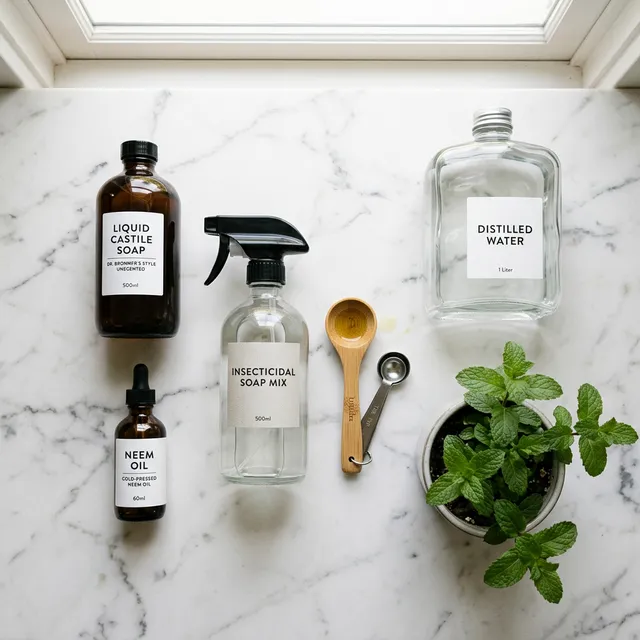
How to Make Insecticidal Soap at Home
Core 3-ingredient method: 1 tablespoon unscented castile per quart, leaf-underside coverage, and the mixing mistakes that burn plants.
guidesInsecticidal Soap Buying Guide: Everything You Need
Shop unscented castile, a dedicated sprayer, and soft water first. Skip a ready-to-use bottle unless you want zero mixing on two houseplants.