Insecticidal Soap vs Neem Oil
Garden Soap Team
· 8 min read
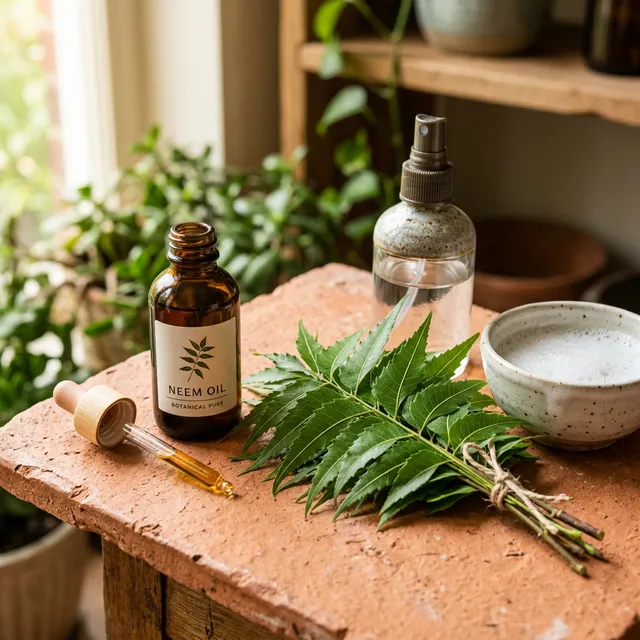
These are the two most popular organic pest control sprays. Extension programs treat them as complementary tools, not interchangeable bottles — they work in completely different ways, and choosing the wrong one for your situation can waste time and let infestations grow.
Here’s the real comparison.
How They Work (The Key Difference)
| Insecticidal Soap | Neem Oil | |
|---|---|---|
| Mechanism | Dissolves insect cuticle (waxy coating) | Disrupts hormones, feeding, and reproduction |
| Kill speed | Minutes (on contact) | Days to weeks (systemic) |
| Residual effect | None, inert when dry | 3-7 days of systemic protection |
| Must contact pest? | Yes, directly | No, absorbed by plant tissue |
| Kills eggs? | No | Partially (disrupts hatching) |
Insecticidal soap is a contact killer. It physically dissolves the soft-bodied insect’s protective coating, causing rapid dehydration and death. But the moment it dries on the leaf, it’s completely inert. New pests that land afterward are unaffected.
Neem oil is a systemic disruptor. Its active compound, azadirachtin, is absorbed by plant tissue and affects insects that feed on treated plants for several days. It interferes with molting, feeding, and egg-laying rather than killing instantly.
Head-to-Head Comparison
| Factor | Insecticidal Soap | Neem Oil |
|---|---|---|
| Speed | ⭐⭐⭐⭐⭐ | ⭐⭐ |
| Duration | ⭐ | ⭐⭐⭐⭐ |
| Plant safety | ⭐⭐⭐⭐⭐ | ⭐⭐⭐ |
| Pest range | ⭐⭐⭐⭐ | ⭐⭐⭐⭐⭐ |
| Ease of use | ⭐⭐⭐⭐⭐ | ⭐⭐⭐ |
| Cost | ⭐⭐⭐⭐⭐ | ⭐⭐⭐ |
| Smell | None | Strong (fades in 24h) |
| Fungal control | No | Yes |
When to Use Insecticidal Soap
Best for:
- 🟢 Active infestations you can see (visible aphid colonies, whitefly clouds)
- 🟢 Quick knockdown, you need pests dead today
- 🟢 Sensitive plants that might react to neem oil
- 🟢 Edible crops near harvest, zero residue, no taste impact
- 🟢 Indoor plants, no strong odor
Recommended: Dr. Bronner’s Castile Soap for DIY, or Safer Brand Concentrate for commercial.
When to Use Neem Oil
Best for:
- 🟢 Prevention, spray before pests arrive for systemic protection
- 🟢 Fungal diseases, neem also fights powdery mildew and black spot
- 🟢 Soil-dwelling pests, neem drenches target fungus gnat larvae
- 🟢 Breaking reproduction cycles, disrupts egg-laying and molting
- 🟢 Persistent infestations, when soap alone isn’t enough
Recommended: Harris Cold-Pressed Neem Oil, look for cold-pressed/raw to retain azadirachtin. Compare concentrates in the best neem oil products for gardens guide.
When to Use Both Together
The soap + neem combination is the most effective organic pest control strategy for most situations. Here’s why they complement each other:
- Soap kills current pests immediately (contact action)
- Neem prevents re-infestation for days (systemic action)
- Soap emulsifies neem, it helps neem oil mix evenly with water
See our complete Neem Oil Insecticidal Soap Spray recipe for the exact formula.
The Combined Approach Schedule
| Day | Action | Product |
|---|---|---|
| 1 | Heavy spray, kill active pests | Soap + Neem combo |
| 5 | Follow-up spray, catch hatchlings | Soap + Neem combo |
| 10 | Third application | Soap + Neem combo |
| 14+ | Preventive maintenance | Neem only (every 2 weeks) |
Safety Comparison
Plant Safety
Insecticidal soap is gentler on most plants. The main risk is phytotoxicity at high concentrations or in extreme heat. Easy to manage with proper dilution (1-2 tbsp per quart).
Neem oil can cause leaf burn if applied in direct sunlight. Never spray neem when temperatures exceed 85°F or in full midday sun. Some plants (particularly ferns and succulents) are sensitive to neem.
Beneficial Insect Safety
Both are safer than synthetic pesticides, but:
- Soap kills any soft-bodied insect it contacts, including beneficial ones present during spraying
- Neem is more selective, it primarily affects feeding insects and is generally less harmful to pollinators that don’t eat plant tissue
Both have no residual effect on beneficials once dry (soap) or after the systemic effect fades (neem, ~7 days).
Human and Pet Safety
Both are safe for household use:
- No toxic residue on food crops
- Zero-day pre-harvest interval (soap); 1-day (neem due to taste)
- Safe around children and pets once dry
- Neem has a strong smell some people find unpleasant, it dissipates within 24 hours
Cost Comparison
| Product | Price | Makes | Cost/Quart |
|---|---|---|---|
| Dr. Bronner’s Castile (32 oz) | ~$12 | 30-60 quarts soap spray | $0.20-0.40 |
| Harris Neem Oil (12 oz) | ~$10 | 12-24 quarts neem spray | $0.40-0.80 |
| Safer Brand Concentrate | ~$12 | 6 quarts | $2.00 |
| Combined soap + neem DIY | ~$22 total | 30+ quarts | $0.50-0.70 |
DIY soap spray is the clear winner on cost. The combo of castile soap + neem oil gives you the best of both worlds for roughly $0.60 per quart.
Bottom Line
- For active infestations: Start with insecticidal soap spray for immediate results
- For prevention: Use neem oil as a systemic protectant
- For best results: Combine both, soap for the instant kill, neem for lasting protection
- For sensitive plants: Use soap alone at low concentration
- For fungal issues too: Neem oil handles pests AND diseases
Listing checks before you buy
Soap and neem listings often share the same “organic pest control” title. They are not interchangeable. These are Garden Soap Team label checks — not a side-by-side product trial.
- Contact vs systemic: Soap kills on contact and is inert when dry. Neem is slower and lasts days. Use soap for a visible colony; use neem for prevention or fungus. The kitchen combo is the neem oil soap recipe. Foliar-only rates without the combined tank: neem oil spray recipe for plants.
- Castile label: Unscented liquid castile, not dish soap. Details in best soap for insecticidal spray.
- Neem label: Cold-pressed / raw so azadirachtin is still in the oil. Clarified hydrophobic extract is a different product. Compare concentrates in best neem oil products.
- Plant heat: Neither product is a midday spray. Patch-test sensitive species — see plants sensitive to insecticidal soap.
- Visible whiteflies: Start with contact soap on leaf undersides. The pest page is insecticidal soap for whiteflies.
Both are essential tools in any organic gardener’s kit. Don’t choose one, use both strategically based on the situation.
How to mix soap, neem, and the combo tank
These are two different rates. Do not “boost” either bottle because the first pass missed undersides.
Soap only (knockdown): 1 tablespoon unscented liquid castile per quart of soft water (~1%). Swirl. Fine mist on leaf undersides until drip. Same-day tank. Kitchen card: basic castile soap spray. Walkthrough: how to make insecticidal soap.
Neem only (prevention / fungus): follow the label, or the foliar starting point on neem oil spray for plants — typically about 2 teaspoons cold-pressed oil per quart with a little soap as emulsifier. Warm water. Emulsify oil with soap in a cup first or the tank is a slick on top and water underneath.
Combo tank: the kitchen card is neem oil insecticidal soap. Soap is the contact kill and the emulsifier. Neem is the slower feeding / molt disruptor. Do not add a second oil, alcohol, and a mystery “plus” to the same quart.
Labeled potassium-salt concentrate instead of kitchen castile: the printed rate on Safer Brand concentrate or the brand comparison on best insecticidal soaps. Do not stack a full kitchen tablespoon of castile on top of a full labeled soap rate.
Pests that pick one bottle over the other
| Pest / job | Start with | Why the other bottle waits |
|---|---|---|
| Visible aphids, whiteflies, mites | Soap | You need contact kill today. Neem is days, not minutes. |
| Soft crawlers (mealybugs, scale) | Soap + swab | Wax and armor shrug off oil-only if you never wet the insect. |
| Thrips in buds / soil stages | Soap on what you can wet; neem if you want feeding disruption between passes | A hotter soap mix does not reach eggs in tissue. |
| Fungus gnat larvae | Neem drench or BTi | Foliar soap only hits flying adults. |
| Powdery mildew / black spot | Neem | Soap is not a fungicide. |
| Japanese beetles, cabbage worms, slugs | Neither as the main tool | Hard bodies and slime need a different product — organic pesticides. |
If the listing says “organic pest control” and shows both a fatty-acid soap and a cold-pressed oil, read the active ingredient. They are not interchangeable SKUs.
Plants and heat that burn on oil vs soap
Soap is usually the gentler film. Neem is an oil. Oils cook faster in sun.
Skip or half-rate either product: succulents and cacti (farina), ferns, African violets, seedlings under about two weeks, heat-stressed tomatoes, thin herbs (cilantro, dill). Desk list: plants sensitive to insecticidal soap. Safety write-up: plant safety.
Neem-specific extra caution: do not oil a leaf in midday sun or when the bed is already wilted above the mid-80s °F. The 85°F rule on this page is about oil burn, not a reason to skip a dawn soap pass on a hardy rose.
Soap-specific extra caution: scented castile (peppermint, tea tree) and dish detergent. Those failures are best soap for insecticidal spray, not a reason to switch to a stronger neem.
Patch-test 24–48 hours on two leaves. If a leaf bronzes, rinse after 1–2 hours and drop the rate. Do not add the other bottle “to be sure.”
Timing: knockdown day vs prevention week
Soap has zero residual. Neem is slower and lasts days, not a season.
| Clock | Soap | Neem |
|---|---|---|
| Active colony you can see | Dawn or evening, every 4–7 days, at least 3 passes | Optional combo on the same pass; neem-only is the wrong first move |
| After rain | Respray when dry | Respray; oil film washes too |
| Prevention on a clean plant | Do not soap on a calendar | Every 7–14 days only if you are actually preventing a known cycle |
| Harvest | Same-day rinse is the usual soap story | Check the neem label; taste/oil film is why some gardeners wait a day |
| Bloom / bees | Spray off-bloom or at dawn; wet soap hits any soft body it touches | Same dawn/evening rule; do not oil open flowers in heat |
Hatch and weather detail: when to spray insecticidal soap. Do not tank-mix soap or neem with an untested fungicide or herbicide.
Buying criteria: soap label vs neem label
Shop the active, not the “organic” tile.
- Soap label: unscented liquid castile, or a potassium-salt concentrate with a printed rate. Detergent (Dawn, “ultra”) is a different chemical. The bottle this desk uses for kitchen mix is Dr. Bronner’s Unscented Baby-Mild.
- Neem label: cold-pressed / raw so azadirachtin is still in the oil. Clarified hydrophobic extract is a different product. Compare concentrates on best neem oil products.
- Water: hard tap water wrecks homemade soap and makes neem separate. Distilled water is cheaper than a second brand.
- Sprayer: fine mist, dedicated to oil/soap. Hardware split: best spray bottles for houseplants; garden sprayers for a bed.
- One job per purchase: do not buy a second RTU soap because neem was slow, or a second neem because soap missed undersides.
Kitchen vs labeled soap spend: homemade vs commercial.
Frequently Asked Questions
Is neem oil or insecticidal soap better for aphids? ▼
Insecticidal soap kills aphids faster on contact, but neem oil provides longer-lasting systemic protection. For active infestations, use soap spray first for immediate knockdown, then switch to neem for prevention.
Can I mix insecticidal soap and neem oil together? ▼
Yes — this is actually one of the most effective organic pest control combinations. The soap acts as an emulsifier for the neem oil and provides immediate contact kill, while neem adds systemic protection. See our neem oil soap spray recipe.
Which is safer for plants — soap or neem oil? ▼
Both are generally safe, but insecticidal soap has a slightly better safety profile for sensitive plants. Neem oil can cause leaf burn in direct sunlight and has a stronger smell. Always patch test either product.
 ✓
✓ The Garden Soap Team writes every recipe and guide on this site. Formulas follow published horticultural guidance — university extension resources, the UC IPM program, and OMRI standards — and we cross-check concentrations and plant-safety warnings against documented gardener experience before publishing. No harsh chemicals, no guesswork passed off as expertise.
📚 Related Articles
recipesNeem Oil Insecticidal Soap Spray
Soap knocks pests down; neem adds a few days of feeding disruption. Mix ratios, evening timing, and when plain castile is still enough.
 guides
Best Soap for Insecticidal Spray (and What to Avoid)
True castile vs dish detergent: unscented liquid soap at 1 tablespoon per quart. Dawn and “ultra” bottles strip leaf wax.
 learn
learnNatural Pest Control Methods That Actually Work
Proven natural pest control methods for gardens and homes. Insecticidal soap, beneficial insects, and companion planting — no synthetic chemicals needed.