Natural Pesticides for Vegetable Gardens
Garden Soap Team
· Updated March 7, 2026 · 8 min read
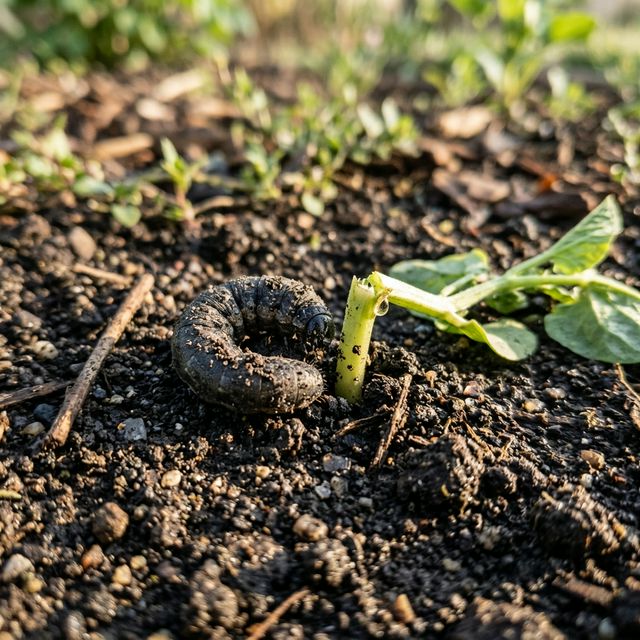
Why Are Gardeners Switching to Natural Pesticides?
The organic farming market hit $231.89 billion in 2025, growing at 11.2% annually (The Business Research Company, 2025). That staggering number tells a simple story: more people than ever want chemicals off their dinner plates.
And it’s not just commercial farms driving this shift. A 2025 GPN Magazine survey found that 63.6% of home gardeners plan to expand their gardens in 2026, with younger growers leading the charge (GPN Magazine, 2025). If you’re among them, you need pest control options that won’t compromise the whole reason you started growing food yourself.
Here is the Garden Soap Team order of use — contact soap first, then residual or pest-specific tools — ranked by what extension IPM pages put on edible beds.
TL;DR: Insecticidal soap kills up to 90% of soft-bodied garden pests on contact (Cornell University, 2025) and costs pennies per application. It’s the safest, most versatile natural pesticide for vegetable gardens. Pair it with neem oil for persistent problems and Bt spray for caterpillars.
How Effective Is Insecticidal Soap on Vegetable Garden Pests?
Controlled tests at Cornell University demonstrate kill rates of up to 90% of aphids on contact (Cornell University, 2025). Research published in Phytoprotection found that concentrations above 12.50 g/L achieved nearly 100% mortality across all aphid life stages within 24 hours (Phytoprotection/Érudit, 2024). This makes insecticidal soap the most reliable first-line defense for vegetable gardens.
Contact soap only works where it wets the insect. Extension pages keep repeating the same coverage rule: most of the colony sits on the leaf underside. Miss that surface and a second application looks like “soap failed.”
What it kills: Aphids, whiteflies, spider mites, young caterpillars, mealybugs, thrips
The recipe is almost insultingly simple:
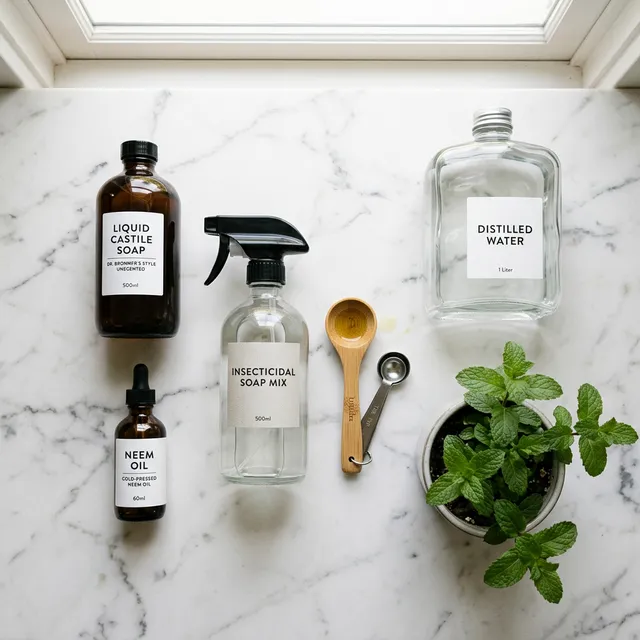
- 1 tablespoon pure liquid castile soap (Dr. Bronner’s is the go-to)
- 1 quart distilled water
- Optional: 1 teaspoon neem oil concentrate for added punch
Mix gently. Spray directly on pests, coating both sides of every leaf. Reapply every 4-7 days. Our full castile soap spray recipe walks through every step.
Insecticidal soap’s potassium salts of fatty acids dissolve soft-bodied insects’ protective waxy coating, causing fatal dehydration within hours. Once dry, it leaves zero toxic residue, you can harvest the same day you spray (Penn State Extension, 2025). That rapid breakdown is exactly why it’s safe for food crops.
One non-negotiable rule: use pure castile soap, never dish soap. Dawn, Ajax, and Palmolive contain synthetic detergents that strip the waxy cuticle from plant leaves, causing sunburn and dehydration. Midday Dawn on peppers is a common gardener-report pattern: leaves crisp within a day or two.
Does Neem Oil Work Better Than Chemical Pesticides?
The global biorational pesticides market is projected to reach $18.85 billion by 2031, growing at a 15.1% CAGR (OpenPR, 2025). Neem oil is driving a significant portion of that growth. Pressed from neem tree seeds, it contains azadirachtin, a compound that disrupts insect feeding, growth, and reproduction simultaneously. Unlike soap, neem doesn’t just kill on contact. The residual repellent effect lasts several days.
Best for: Aphids, whiteflies, beetles, caterpillars, fungus gnats, and powdery mildew
How to make it:
- 1 teaspoon cold-pressed neem oil
- 1 teaspoon liquid castile soap (emulsifier)
- 1 quart warm water
The soap helps oil mix with water evenly. Shake well before each spray. Full instructions in our neem oil soap spray recipe.
Desk note: Azadirachtin is sold as an insecticide, but extension disease pages also list neem oil against powdery mildew. A weekly evening spray in humid weather is often a dual-purpose pass — pests and foliar disease — if the mix is emulsified and the temperature stays below the burn threshold.
Critical timing: Apply neem only in the evening. The oil burns leaves in direct sunlight, and spraying after dusk also protects pollinators. Neem is OMRI-certified for organic gardening but is harmful to bees on wet contact (UC ANR, 2025).
What Is the Best Repellent Spray for Vegetable Gardens?
Research shows that basil’s volatile compounds reduce aphid colonization by up to 40% through scent-masking alone (Country Comfort Farma, 2025). Garlic-pepper spray uses the same principle, capsaicin irritates insects on contact, while garlic’s sulfur compounds overwhelm the chemical signals pests use to find your plants.
Best for: Aphids, Japanese beetles, caterpillars, deer, rabbits, squirrels
How to make it:
- 1 full head of garlic, minced
- 2-3 hot peppers (cayenne or habanero), chopped
- 1 tablespoon liquid castile soap
- 1 quart water
Blend garlic and peppers with water, steep overnight, strain through cheesecloth, add soap. Spray every 5-7 days and always after rain. Our garlic pepper soap spray recipe has detailed measurements.
This spray won’t kill pests, it repels them. Think of it as a fence, not a weapon. When aphids can’t smell your tomato plants through the garlic-pepper cloud, they fly to your neighbor’s garden instead. Harsh? Maybe. Effective? Absolutely.
Caution: Wear gloves when handling hot peppers. Capsaicin doesn’t discriminate, your fingertips will burn for hours if you forget. Rinse vegetables thoroughly before eating.
Can Diatomaceous Earth Protect Vegetables From Slugs?
Food-grade diatomaceous earth (DE) is a powder made from fossilized algae. Under a microscope, each grain has razor-sharp edges that slash through insect exoskeletons, causing dehydration and death within 48 hours. No chemicals involved. Just tiny, ancient fossils doing their job.
Best for: Slugs, beetles, ants, earwigs, crawling insects
How to use:
- Dust a thin layer around the base of plants
- Apply to leaf surfaces using a powder duster for even coverage
- Reapply after rain or watering, DE is only effective when dry
A thin ring of food-grade DE around seedlings is the usual slug barrier. The part listings skip: DE is only abrasive when dry. After rain or irrigation you reapply. Every time. Full rates and limits are on diatomaceous earth for gardens.
Safety: Buy food-grade DE only, it’s classified as GRAS (Generally Recognized as Safe) by the FDA and is even used as an anti-caking agent in stored grain. Pool-grade DE is chemically treated and dangerous to inhale. Different product, same name. Read the label.
What Natural Pesticide Kills Caterpillars Without Harming Bees?
Bacillus thuringiensis (Bt) is the answer. This naturally occurring soil bacterium produces proteins specifically toxic to caterpillars, and nothing else. When a caterpillar eats a Bt-coated leaf, it stops feeding within hours and dies within 2-3 days. Ladybugs, bees, earthworms, and birds? Completely unaffected.
Best for: Tomato hornworms, cabbage worms, cabbage loopers, corn earworms
How to use:
- Buy Bt concentrate (Thuricide or Monterey Bt)
- Mix according to label directions
- Spray on leaves, coating the undersides, that’s where caterpillars feed
Timing is critical. Apply Bt when caterpillars are small, ideally in their first or second instar. Large caterpillars are significantly more resistant. Bt is OMRI-certified for organic gardens and breaks down within 3-7 days in sunlight.
Does this mean you can skip hand-picking? Not for the big ones. But for those tiny green cabbage worms that hide between broccoli florets? Bt finds them when your fingers can’t.
Do Companion Plants Actually Reduce Garden Pests?
Newcastle University researchers demonstrated that French marigolds significantly slowed whitefly population development on tomato plants planted alongside them (NIH/PubMed, 2024). Separately, Holy Basil (Tulsi) showed up to 67% repellency against mosquitoes in field trials, with the effect lasting over three hours (Advances in Research, 2024).
Companion planting won’t cure an existing infestation. But it dramatically reduces how many pests show up in the first place. Think of it as the security system versus the fire extinguisher, you want both, but the security system prevents more damage.
Companion pairings extension and gardener-report tables repeat most often:
| Companion Plant | Repels | Plant Near |
|---|---|---|
| Marigolds | Whiteflies, aphids, nematodes | Every bed (borders) |
| Basil | Mosquitoes, aphids, flies | Tomatoes, peppers |
| Nasturtiums | Aphids (trap crop) | Squash, cucumbers |
| Chives | Japanese beetles, aphids | Carrots, tomatoes |
| Dill | Spider mites | Cabbage, lettuce |
| Rosemary | Cabbage moths | Beans, carrots |
Desk note: Marigold borders are a prevention layer, not a numbered trial. Extension companion pages treat them as a habitat and trap-crop tool. They do not replace coverage when a colony is already on the leaf underside.
For a deeper dive into which plants repel specific pests, see our complete guide to bug-repelling plants.
Which Method Should You Use When?
Every pest problem has an optimal first response. Reaching for the wrong tool wastes time and sometimes makes things worse.
| Situation | First Try | Escalate To |
|---|---|---|
| Aphids on lettuce | Insecticidal soap | Neem oil if persistent |
| Caterpillars on tomatoes | Bt spray | Hand-pick large ones |
| Slugs eating seedlings | Diatomaceous earth | Beer traps at night |
| Beetles on beans | Garlic pepper spray | Hand-pick + row covers |
| General prevention | Companion planting | Rotating crops yearly |
| Spider mites on cucumbers | Neem oil soap spray | Increase humidity |
Common Mistakes That Ruin Natural Pesticides
These are the mixing and timing errors extension pages and gardener reports flag most often:
-
Too much soap. More isn’t better. Above 2% concentration, you risk phytotoxicity, the soap starts killing plant cells. Stick to 1 tablespoon per quart.
-
Spraying at midday. Water droplets on leaves in full sun act like magnifying glasses. Combined with soap stripping some wax, you’ll scorch foliage badly. Spray at dawn or dusk. Always.
-
One application and done. Natural pesticides don’t persist like synthetic ones. Plan for 3-4 weekly applications during active infestations. That quick breakdown is a feature, it’s exactly why they’re food-safe.
-
Using dish soap. This might be the most common mistake on the internet. Dawn contains synthetic detergents that destroy plant leaves. Pure castile soap only.
-
Killing beneficials by accident. If ladybugs and lacewings are active in your garden, don’t spray broadly. Target only the infested areas. Broad-spectrum spraying, even with natural products, wipes out the predators that are doing pest control for free.
Ready to Start?
For most vegetable gardens, here’s your simple three-tier system: insecticidal soap handles daily pest problems, neem oil handles the stubborn ones, and companion planting reduces how many pests arrive in the first place.
Start with our basic castile soap spray recipe. Five minutes, three ingredients. Ranked bottle-vs-kitchen notes — when to buy Bt or spinosad instead of another RTU soap — live on best organic pesticides for vegetable gardens.
Listing checks before you buy
These notes decide whether a second bottle is useful. They are not Amazon listing copy.
- When DIY soap is enough: Aphids, whiteflies, and mites on edible leaves are a 1% castile mix. Buy Bt for caterpillars, spinosad for beetles that shrug off soap, and DE for slugs — not another ready-to-use soap for the same colony.
- Soft water vs hard water: Soap and neem fail in hard tap water. Distilled water is a cheaper “product” than a second pesticide. If the mix looks like scum, do not spray it.
- Plant sensitivity: Delicate herbs and heat-stressed tomatoes burn from oil and from over-concentrated soap. Patch-test. Never stack soap + spinosad + pyrethrin in one tank “to be sure.”
- Concentration: Soap at 1 tablespoon per quart; neem only as an emulsified add-in. More product does not replace underside coverage. The ranked buy list is best organic pesticides for vegetable gardens.
Frequently Asked Questions
Are natural pesticides safe to use on edible vegetables? ▼
Yes — natural pesticides like insecticidal soap, neem oil, and garlic spray break down quickly and are safe for food crops when used as directed. The EPA classifies potassium salts of fatty acids (insecticidal soap's active ingredient) as a minimum-risk pesticide. Always rinse produce before eating.
What is the best organic pesticide for a vegetable garden? ▼
Insecticidal soap made from pure castile soap is the most versatile organic option. Cornell University research shows it kills up to 90% of soft-bodied pests on contact. For persistent infestations, neem oil provides longer-lasting protection through its azadirachtin compound.
Can I spray insecticidal soap on tomatoes and peppers? ▼
Yes, most nightshade vegetables tolerate insecticidal soap well. Apply in early morning or evening when temperatures are below 90°F. Penn State Extension recommends a patch test on 2-3 leaves before full treatment, waiting 48 hours to check for phytotoxicity.
 ✓
✓ The Garden Soap Team writes every recipe and guide on this site. Formulas follow published horticultural guidance — university extension resources, the UC IPM program, and OMRI standards — and we cross-check concentrations and plant-safety warnings against documented gardener experience before publishing. No harsh chemicals, no guesswork passed off as expertise.
📚 Related Articles
 guides
How to Make Insecticidal Soap at Home
Core 3-ingredient method: 1 tablespoon unscented castile per quart, leaf-underside coverage, and the mixing mistakes that burn plants.
 guides
Best Organic Pesticides for Vegetable Gardens
Start with 1% castile for soft-bodied pests. Buy Bt for caterpillars and spinosad for beetles — not another RTU soap for the same aphids.
 recipes
Basic Castile Insecticidal Soap Spray
The simplest and most effective homemade insecticidal soap recipe using pure castile soap. Works on aphids, whiteflies, and spider mites.