Best Garden Sprayers for Insecticidal Soap
Garden Soap Team
· 8 min read
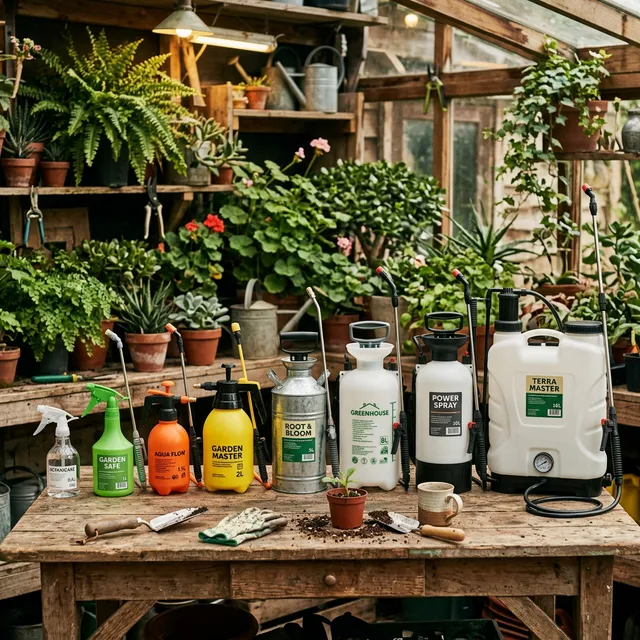
When to Upgrade from a Spray Bottle
A trigger spray bottle is fine for a few houseplants. But once you’re treating a vegetable garden, rose bushes, or fruit trees, hand fatigue becomes a real problem. You need consistent, even coverage, and pumping a trigger 500 times per treatment session isn’t sustainable.
A pump sprayer solves this: pump it 10-15 times, then spray continuously with steady pressure.
Garden Soap Team buying notes
Buy a sprayer for coverage and fatigue — not because a listing says “professional.” The mix in the tank matters more than the brand on the wand.
- When DIY is enough: A clean 32 oz trigger bottle is enough for houseplants and a few containers. Upgrade to a 1-gallon pump when you have a bed, roses, or fruit trees and you are already mixing homemade soap. Do not buy a backpack until a gallon sprayer is the bottleneck.
- Soft water vs hard water: Hard water leaves white scale in brass nozzles and on leaf undersides. If your tap is hard, pair the sprayer with distilled water or a monthly vinegar soak — otherwise you will blame the hardware for a chemistry problem.
- Plant sensitivity: Fine mist for seedlings, ferns, and indoor foliage; a slightly heavier spray for leaf undersides on squash and tomatoes. A hose-end sprayer is the wrong tool for soap because you cannot hold 1% concentration.
- Concentration: Set the ratio in the tank (4 tablespoons of castile per gallon for the standard 1% mix). Pumping harder does not make a weak mix work. Never store leftover dilution in the tank — it separates and clogs seals.
Types of Garden Sprayers
Hand Pump Sprayer (1-2 Gallon)
Best for most home gardeners. Holds 1-2 gallons of solution, sits on the ground while you carry the wand.
- Coverage: 10-40 plants per fill
- Pressure holds for 2-3 minutes between pumps
- Adjustable nozzle for mist or stream
- Price: $15-35
Backpack Sprayer (2-4 Gallon)
For serious gardeners and small farms. Straps on like a backpack, leaving both hands for the wand.
- Coverage: 40-100+ plants per fill
- Constant pressure via pump lever
- Extended reach for trees and tall plants
- Price: $40-80
Battery-Powered Sprayer
Maximum convenience. Rechargeable pump provides continuous pressure without manual pumping.
- Coverage: Same as equivalent manual size
- No pumping required; steady output
- Heavier and more expensive
- Price: $50-120
Hose-End Sprayer
For very large areas. Attaches to garden hose for unlimited water supply.
- Dilution can be imprecise
- Not recommended for insecticidal soap (hard to control concentration)
- Better for fertilizer application
Our Top Recommendation
For most gardeners making insecticidal soap at home, a 1-gallon hand pump sprayer hits the sweet spot of capacity, portability, and price. It’s enough to treat 15-30 plants per fill without being too heavy.
Key features to look for:
- Adjustable brass nozzle (mist to stream)
- Pressure relief valve
- Chemical-resistant seals (Viton or EPDM)
- Translucent tank (see fill level)
- Wide-mouth opening for easy filling and cleaning
- Comfortable pump handle
How to Use a Pump Sprayer for Insecticidal Soap
Step 1: Mix in the Sprayer
- Add castile soap to the tank first (4 tablespoons per gallon)
- If using neem oil, add it now (4 teaspoons per gallon)
- Fill with warm water slowly (reduces foam)
- Swirl gently; don’t shake
Step 2: Pressurize
- Pump 10-15 times until resistance builds
- Test spray on the ground to verify nozzle setting
- Adjust to fine mist for general coverage
Step 3: Spray
- Start with leaf undersides (where 90% of pests live)
- Spray until dripping; light misting is insufficient
- Move systematically through the garden; don’t skip plants
- Re-pump every 2-3 minutes to maintain pressure
Step 4: Clean Immediately
- Empty any remaining solution (never store mixed soap)
- Fill halfway with clean water
- Pressurize and spray until clear
- Remove nozzle tip and rinse separately
- Store with tank inverted (prevents residual soap hardening)
Common Sprayer Problems and Fixes
| Problem | Cause | Fix |
|---|---|---|
| Inconsistent spray | Low pressure | Pump more frequently |
| Foamy output | Over-agitated soap | Mix more gently, use warm water |
| Clogged nozzle | Dried soap residue | Soak in warm vinegar, use thin wire to clear |
| Leaking seals | Chemical degradation | Replace O-rings (check material compatibility) |
| No spray output | Blocked filter | Clean intake filter at bottom of dip tube |
| Drifting spray | Too much pressure / wind | Reduce pump strokes, spray closer to plants |
Sprayer Maintenance Schedule
| Frequency | Task |
|---|---|
| After every use | Rinse with clean water |
| Monthly | Soak nozzle in vinegar, inspect seals |
| Seasonally | Replace worn O-rings, clean dip tube filter |
| Annually | Lubricate pump shaft, check all connections |
A well-maintained pump sprayer lasts 5-10 years. Most sprayer failures come from failing to rinse after use, which allows soap to crystallize in the mechanism.
What About Commercial Sprayer Concentrates?
If you’d rather skip mixing entirely, commercial insecticidal soap concentrates like Safer Brand concentrate come with their own dilution instructions designed for pump sprayers. The same sprayer care rules apply.
Soap-specific coverage (not just tank size)
A bigger tank does not kill more aphids. Soap is a contact film. The sprayer’s job is to wet the underside of every infested leaf without turning the mix into foam or a firehose.
What the hardware has to do for soap:
- Fine mist that still drips. A fog that evaporates in sun misses the cuticle. A jet that bruises a tomato leaflet dumps 1% in one spot and skips the next.
- A wand you can flip. Whiteflies, mites, and aphids sit on the back of the leaf. If the wand cannot comfortably point up, you will cheat and spray the pretty side.
- Pressure that holds. Trigger bottles die on a rose bed because fatigue skips plants. A 1-gallon pump that you re-pressurize every few minutes is the usual upgrade. Houseplant-only hardware stays on best spray bottles.
- A tank you empty. Fatty-acid mix separates and dries in seals. Soap is the worst leftover to store in a sprayer.
Pests this setup is for: foliar soft-bodied colonies — aphids, whiteflies, mites, reachable thrips. A backpack does not make soap work on Japanese beetles or cabbage worms.
Walk the bed the same way every pass: start at the far end, flip leaves, drip, step. If you finish a gallon and the undersides are dry, you bought capacity and spent it on the tops.
Phytotoxicity from the wrong nozzle
Most “the soap burned my plant” notes after a new sprayer are rate in the wrong place, not a bad brand of castile.
- Coarse stream on succulents, ferns, or seedlings puddles soap and strips wax. Use a true fine mist or a cotton swab. Host list: plants sensitive to insecticidal soap.
- Hose-end “soap” settings cannot hold 1%. You will either under-dilute (burn) or over-dilute (miss). Hose-end is a fertilizer tool.
- Hard-water scale in a brass tip turns mist into spit. That spit hits one leaf too hard and misses the next. Distilled water in the tank plus a monthly vinegar soak is cheaper than a new wand.
- Foam from a shaken tank sits on hairs (African violet, some herbs) and dries as residue. Swirl, don’t shake.
- Midday + fine droplets on a wilted tomato is a cook, not a pest treatment. Safety write-up: plant safety.
If a leaf bronzes within a day, rinse, drop toward 0.5% on that host, and check the nozzle before you blame the concentrate.
Application timing with a tank on your hip
The tank does not change the hatch clock. It only makes it possible to finish the bed while the film is still useful.
| Constraint | What to do with a pump or backpack |
|---|---|
| Time of day | Mix and walk at dawn, or evening if leaves can dry. Do not pump up a gallon at noon “to get it done.” |
| Heat | If the bed is already wilted, water first, wait, then soap another morning. |
| Rain | A tank is wasted in a shower. Wait for a dry window of a few hours; respray if you were rained out mid-row. |
| Recheck | Same 4–7 days as a trigger bottle. Eggs still hatch. When to spray. |
| Pets / kids | Same as any soap pass: off the foliage until dry. Do not leave a pressurized tank where a child can trigger the wand. |
| Mix in the tank | Kitchen: 4 tablespoons unscented castile per gallon (~1%). Labeled concentrate: the printed rate. How-to: how to make insecticidal soap. |
Do not tank-mix soap with an untested fungicide or herbicide. Soap + a measured neem dose is a known combo (neem oil insecticidal soap); soap + “everything else in the shed” is how seals swell and leaves cook.
Buying criteria for a soap sprayer
Shop the wet leaf, not the “professional” badge.
- Size to the bed you have. 32 oz trigger: houseplants and a patio. 1-gallon pump: one vegetable bed or a rose row. Backpack: only after a gallon is the bottleneck.
- Adjustable tip that can mist. Brass or stainless lasts longer in soap than cheap plastic.
- Viton or EPDM seals. Soap is mild on people and hard on the wrong elastomer.
- Wide mouth and a filter you can rinse. You will mix in this tank. You will also clean it.
- Dedicated to soap. A wand that last sprayed herbicide is not a $20 savings.
- Water plan. Hard tap water scales the tip and weakens homemade mix. Distilled water is part of the sprayer purchase. If you refuse jugs, a labeled concentrate is more forgiving than a fancier pump.
- Skip hose-end for fatty-acid soap. Concentration is the safety feature.
Kit math (soap + sprayer + water) is the buying guide. Castile vs detergent is best soap for insecticidal spray. Kitchen vs labeled bottle is homemade vs commercial.
Frequently Asked Questions
What kind of sprayer should I use for insecticidal soap? ▼
For gardens with more than 5-10 plants, a 1-2 gallon pump sprayer is the best choice. It delivers consistent pressure, reduces hand fatigue, and provides better coverage than trigger spray bottles. Look for adjustable brass nozzles.
Can I use a hose-end sprayer for insecticidal soap? ▼
Hose-end sprayers work but are harder to control dilution accurately. Since insecticidal soap concentration matters for both effectiveness and plant safety, a pump sprayer with pre-measured solution gives more reliable results.
How do I clean a sprayer after using insecticidal soap? ▼
Rinse immediately after use by filling with clean water and spraying until clear. Remove the nozzle tip and soak in warm vinegar water monthly. Never let soap dry in the sprayer mechanism.
 ✓
✓ The Garden Soap Team writes every recipe and guide on this site. Formulas follow published horticultural guidance — university extension resources, the UC IPM program, and OMRI standards — and we cross-check concentrations and plant-safety warnings against documented gardener experience before publishing. No harsh chemicals, no guesswork passed off as expertise.
📚 Related Articles
guidesBest Spray Bottles for Garden Use
A dedicated 32 oz trigger covers houseplants; upgrade when fatigue skips leaf undersides. Fine mist, not a reused bleach bottle.
 guides
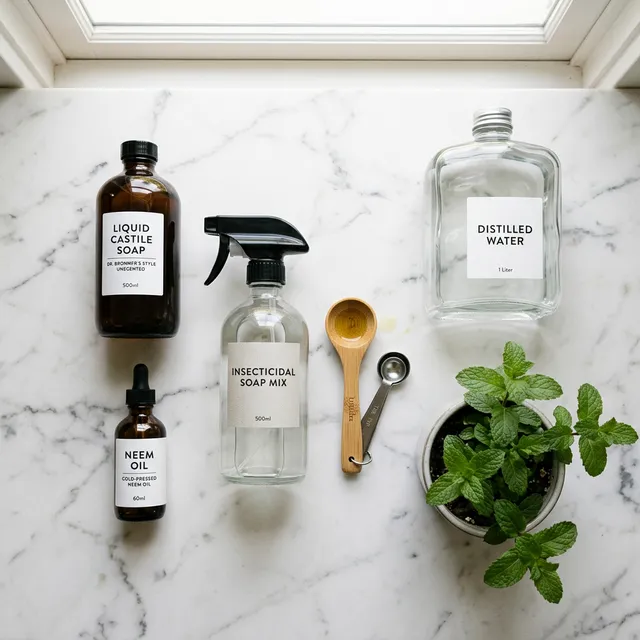
How to Make Insecticidal Soap at Home
Core 3-ingredient method: 1 tablespoon unscented castile per quart, leaf-underside coverage, and the mixing mistakes that burn plants.
 guides
Best Insecticidal Soap: 5 Top Brands Compared
Safer concentrate vs RTU bottles: when kitchen castile is enough, when hard water argues for a labeled mix, and which format ships water.