Homemade Mosquito Repellent: 5 DIY Recipes That Actually Work
Make your own DEET-free mosquito repellent with these 5 proven DIY recipes using essential oils and natural ingredients.
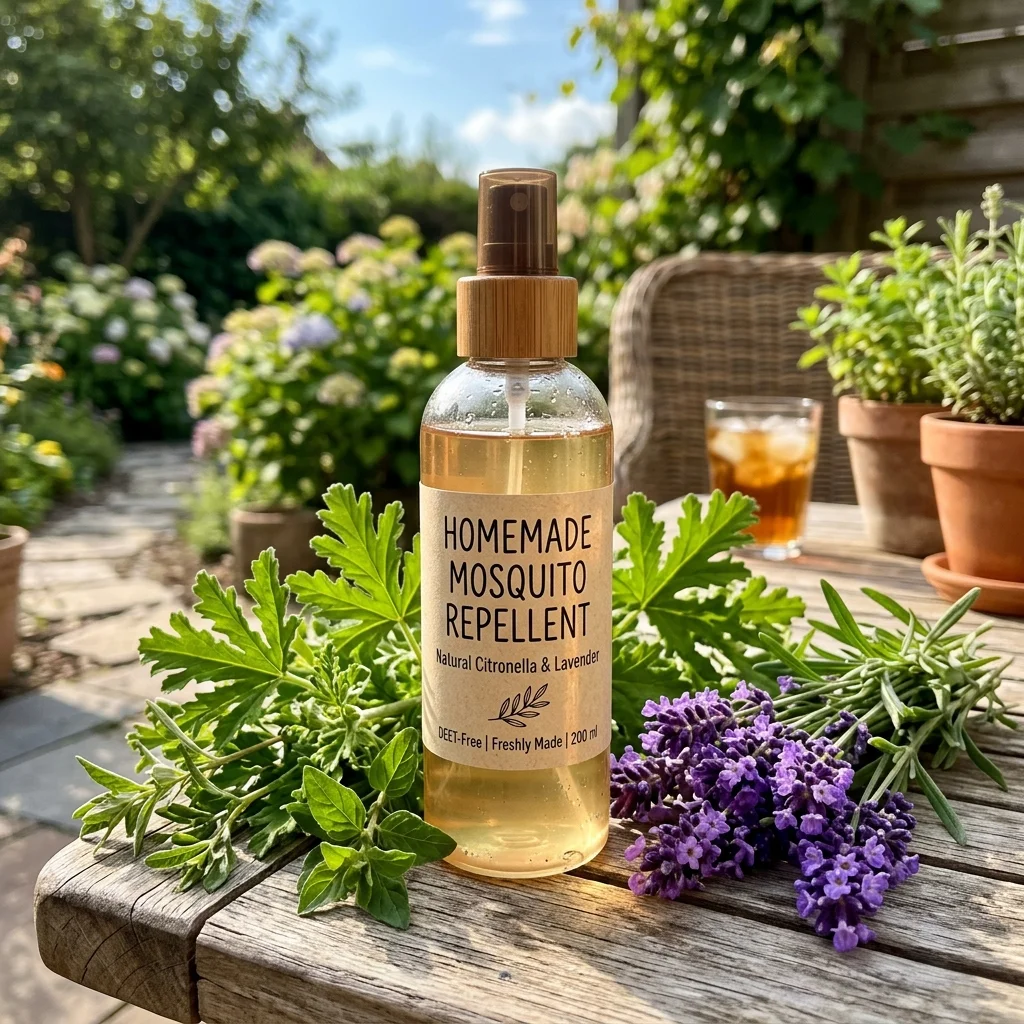
Commercial mosquito repellents work. DEET is the gold standard, and picaridin is a close second. But if you prefer to know exactly what you’re putting on your skin, or you need a solution right now from ingredients already in your kitchen, these five recipes are your best options.
Each recipe includes the active compound, why it works, and how long you can expect it to last. No miracle claims, just realistic expectations.
Recipe 1: Lemon Eucalyptus Oil Spray (Most Effective)
This is the only natural mosquito repellent the CDC recommends as an alternative to DEET. OLE (oil of lemon eucalyptus) contains p-menthane-3,8-diol (PMD), which has been shown in peer-reviewed studies to repel mosquitoes for up to 6 hours.
Ingredients
- 10 drops oil of lemon eucalyptus (OLE), not regular eucalyptus oil
- 1 oz witch hazel or rubbing alcohol
- 1 oz distilled water
- Spray bottle (2-4 oz glass preferred)
Directions
- Combine witch hazel and OLE in the spray bottle.
- Add distilled water. Shake well.
- Spray on exposed skin and clothing. Reapply every 4-6 hours.
Effectiveness
⭐⭐⭐⭐½, Published studies show 95-97% repellency for the first 2 hours, declining to ~85% at 4 hours. This is the closest natural alternative to DEET.
⚠️ Important: Oil of lemon eucalyptus (OLE) is NOT the same as lemon eucalyptus essential oil. OLE is a refined extract with concentrated PMD. Regular eucalyptus essential oil does not contain enough PMD to be effective. Check the label, it should specifically say “oil of lemon eucalyptus” or “p-menthane-3,8-diol.”
Recipe 2: Citronella & Lavender Body Spray
Citronella is the classic natural mosquito repellent, it’s what’s in those yellow candles and tiki torch oils. Combined with lavender (which mosquitoes also dislike), this body spray provides moderate protection for outdoor dining and patio time.
Ingredients
- 15 drops citronella essential oil
- 10 drops lavender essential oil
- 2 tablespoons carrier oil (jojoba, sweet almond, or coconut)
- 1 oz distilled water
- Spray bottle
Directions
- Mix essential oils with carrier oil first (this helps them disperse in water).
- Add distilled water. Shake vigorously before each use.
- Spray on exposed skin. Reapply every 1-2 hours.
Effectiveness
⭐⭐⭐, Provides 1-2 hours of moderate protection. Better than nothing, but significantly less effective than OLE or DEET. Best for low-mosquito situations (patio, garden) rather than high-exposure activities (hiking, camping).
Recipe 3: Apple Cider Vinegar Mosquito Spray
ACV-based repellents work through scent masking, vinegar’s strong acidity alters the skin’s scent profile, making it harder for mosquitoes to find you by CO2 and lactic acid. It’s not as studied as OLE, but it’s the cheapest recipe on this list and uses ingredients you already have.
Ingredients
- ¼ cup apple cider vinegar
- ¼ cup water
- 10 drops peppermint essential oil (optional, improves scent and adds mild repellency)
- Spray bottle
Directions
- Mix ACV and water in the spray bottle.
- Add peppermint oil if using. Shake well.
- Spray on skin and clothing. Reapply every 1-2 hours.
Effectiveness
⭐⭐½, Anecdotally effective; limited published data. The vinegar smell fades within 10-15 minutes on skin but does linger on clothing. Best as a supplement to other methods, not a standalone solution in heavy mosquito areas.
Recipe 4: Herb-Infused Repellent Oil
This is a no-essential-oil option for people who prefer whole herbs. The infusion process extracts the aromatic compounds that mosquitoes find repellent, primarily from rosemary, basil, and thyme, all of which have documented mosquito-repellent properties.
Ingredients
- 2 tablespoons fresh rosemary, chopped
- 2 tablespoons fresh basil, chopped
- 1 tablespoon fresh thyme, chopped
- ½ cup carrier oil (olive or grapeseed work well)
- Glass jar with lid
Directions
- Place herbs in the glass jar. Cover with carrier oil.
- Seal and place in a sunny window for 48 hours. Shake once daily.
- Strain through cheesecloth. Store the infused oil in a dark glass bottle.
- Apply directly to skin as needed.
Effectiveness
⭐⭐, Mild repellency. The concentration of active compounds is lower than essential oil versions. This is best as a pleasant-smelling skin oil that offers some mosquito deterrence rather than serious protection.
Recipe 5: Neem Oil Concentrate
Neem oil is both a mosquito repellent and an insecticide, it’s the active ingredient in many organic garden sprays. A 2% neem oil solution provided 56-100% protection against Anopheles mosquitoes for 8-10 hours in one published study (Sharma et al., Indian Journal of Malariology, 1993).
Ingredients
- 1 teaspoon cold-pressed neem oil
- 2 tablespoons carrier oil (coconut or jojoba)
- Optional: 5 drops lavender oil (masks neem’s strong smell)
- Small bottle
Directions
- Mix neem oil with carrier oil.
- Add lavender oil if desired. Mix well.
- Apply to exposed skin. Reapply every 4-6 hours.
Effectiveness
⭐⭐⭐⭐, Surprisingly strong. Neem’s azadirachtin compound disrupts mosquito feeding behavior. The downside is the smell, neem oil has a strong garlic-sulfur odor that most people find unpleasant. Lavender helps but doesn’t fully mask it.
Effectiveness Comparison
| Recipe | Active Compound | Duration | Effectiveness | Smell |
|---|---|---|---|---|
| Lemon eucalyptus | PMD | 4-6 hours | ⭐⭐⭐⭐½ | Pleasant lemon |
| Citronella + lavender | Citronellal | 1-2 hours | ⭐⭐⭐ | Floral-citrus |
| Apple cider vinegar | Acetic acid | 1-2 hours | ⭐⭐½ | Vinegar (fades) |
| Herb-infused oil | Mixed terpenes | 1-2 hours | ⭐⭐ | Herbal |
| Neem oil | Azadirachtin | 4-6 hours | ⭐⭐⭐⭐ | Strong (unpleasant) |
When Homemade Isn’t Enough
Be realistic: for serious mosquito exposure, hiking in wetlands, tropical travel, evening activities in high-density areas, these homemade recipes may not provide adequate protection against mosquito-borne diseases.
If you’re in an area with malaria, dengue, Zika, or West Nile concern, use EPA-registered repellents containing DEET (20-30%), picaridin (20%), or IR3535. Your health is more important than avoiding synthetic chemicals.
For backyard barbecues, patio evenings, and casual outdoor time? These recipes work well enough to keep you comfortable without the ingredients you’re trying to avoid.
Related Recipes
- Homemade Insecticidal Soap: Dawn Dish Soap Recipe
- Essential Oil Insecticidal Soap Spray
- Garlic Pepper Soap Spray
We evaluate gardening and home guides independently. To learn more about our editorial standards, read our Editorial Policy.
 ✓
✓ The Garden Soap Team writes every recipe and guide on this site. Formulas follow published horticultural guidance — university extension resources, the UC IPM program, and OMRI standards — and we cross-check concentrations and plant-safety warnings against documented gardener experience before publishing. No harsh chemicals, no guesswork passed off as expertise.
📚 Related Articles
 learn
learnEssential Oils That Repel Garden Pests
Which essential oils actually work against garden pests, backed by research. Recipes, application methods, and what to skip.
 guides
Homemade vs Commercial Insecticidal Soap
Same fatty-acid chemistry, different spend: kitchen castile vs a labeled concentrate. When mixing wins, and when a store bottle is backup.
 guides
Best Soap for Insecticidal Spray (and What to Avoid)
True castile vs dish detergent: unscented liquid soap at 1 tablespoon per quart. Dawn and “ultra” bottles strip leaf wax.