How to Make a DIY Insecticidal Soap Recipe: Specific Benefits
Garden Soap Team
· 8 min read
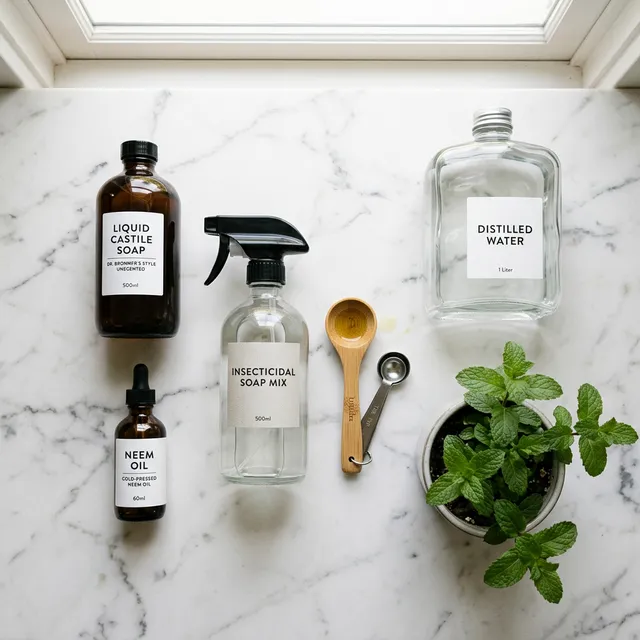
The best DIY insecticidal soap recipe mixes 1 tablespoon of pure liquid castile soap with 1 quart of distilled water. Spray this solution directly onto soft-bodied pests like aphids and spider mites until they are dripping wet, ensuring thorough coverage on both the tops and bottoms of all leaves.
This page is the recipe-card format — batch table, H2 questions, and a short mix/apply checklist you can follow like a kitchen card. For the narrative 3-ingredient method, see How to Make Insecticidal Soap at Home. For ratio tables and the 48-hour patch-test protocol, see How to Make Insecticidal Soap at Home: Complete DIY Recipe. The ingredients-sidebar version is Basic Castile Insecticidal Soap Spray.
Executive Summary
- Primary Recipe: Mix 1 tablespoon of liquid castile soap per 1 quart of distilled water.
- Target Pests: Works on contact against aphids, spider mites, thrips, whiteflies, and mealybugs.
- Key Ingredients: Use pure castile soap; avoid synthetic dish soaps, degreasers, or detergents.
- Safe Application: Always patch-test a few leaves 48 hours before spraying the entire plant.
What is the best DIY insecticidal soap recipe for garden pests?
Creating an effective pest control spray at home is easy when you follow correct ratios. The standard DIY recipe relies on natural ingredients that target soft-bodied insects without introducing harsh synthetic chemicals.
To make the standard 1% mixture, combine 1 tablespoon of pure liquid castile soap with 1 quart of lukewarm water. For larger batches, use 4 tablespoons (1/4 cup) of liquid castile soap per 1 gallon of water.
Below is a quick reference table showing the ratios for different batch sizes:
| Batch Size | Pure Liquid Castile Soap | Lukewarm Water (Distilled) |
|---|---|---|
| 1 Quart (32 oz) | 1 tablespoon | 4 cups (1 quart) |
| 1 Gallon (128 oz) | 4 tablespoons (1/4 cup) | 16 cups (1 gallon) |
For this recipe, we recommend using a pure base soap. Recommended: Dr. Bronner’s Unscented Baby-Mild Pure-Castile Liquid Soap.
To improve the spray, add 1 teaspoon of vegetable oil or pure cold-pressed neem oil per quart. This helps the solution stick to leaves. Do not exceed these ratios, as excess oil can clog plant pores and cause leaf damage in warm weather.
Why should you choose pure castile soap over regular dish soap?
Many guides recommend dish soap for bug sprays, but choosing the wrong soap causes severe leaf damage. True soap and synthetic detergents are chemically different, which affects how safe they are for plants.
True soap is made through saponification, combining natural fats or plant oils with an alkali. This creates potassium salts of fatty acids, the active ingredients that dissolve the outer coatings of soft-bodied pests. Pure liquid castile soap, made from olive or coconut oils, is a true soap that kills pests while remaining gentle on plant tissue. When researching the best soap for insecticidal spray, castile soap is the safest choice. For the full science, patch-test, and application walkthrough, see how to make insecticidal soap at home.
In contrast, dish soaps are synthetic detergents containing sodium lauryl sulfate, degreasers, and fragrances. These chemicals strip away the cuticle, the natural waxy coating on leaves. Without this layer, plants lose moisture, leading to leaf burn and dehydration.
Which specific garden pests does this soap recipe control?
This DIY recipe targets soft-bodied insects that lack hard shells, making them vulnerable to the soap’s physical mode of action.
The primary target pests include:
- Aphids: Small, pear-shaped insects that suck sap from new growth. Start with insecticidal soap for aphids if colonies are already clustered on new growth.
- Spider Mites: Tiny arachnids that spin fine webs and leave yellow speckles on leaf undersides.
- Whiteflies: Small, powdery-white pests that gather under leaves and fly up when disturbed.
- Thrips: Slender pests that scar leaf surfaces and ruin developing buds.
- Mealybugs: Slow, cottony pests that nest in leaf joints, sucking sap.
The soap dissolves the insect’s protective waxy cuticle upon contact, leading to rapid dehydration and suffocation. Since it works through physical contact, pests cannot develop resistance.
However, this spray does not harm adult beetles, squash bugs, or caterpillars, whose tough shells protect them. It also does not kill insect eggs, making repeat applications necessary.
How does water hardness affect the success of your soap spray?
Water quality determines whether your homemade spray succeeds. Many gardeners mix their spray using tap water, unaware that minerals can completely deactivate the soap.
Hard water contains high levels of calcium and magnesium. When you mix castile soap with hard water, these minerals bind to the active potassium salts of fatty acids. This chemical reaction creates an insoluble curd or soap scum.
This scum causes three major problems:
- Reduces Effectiveness: The reaction locks up the active soap molecules, leaving very little soap to kill the insects.
- Leaves Leaf Residue: The scum deposits a cloudy white film on leaves that blocks sunlight and reduces photosynthesis.
- Clogs Equipment: The sticky scum builds up inside the nozzle of your 32 oz glass spray bottle, clogging the trigger.
To ensure your spray works, use distilled water or rainwater. If using tap water, add 1 teaspoon of white vinegar per quart to bind mineral ions before adding the soap.
What is the step-by-step process to mix and apply DIY insecticidal soap?
Proper mixing and application are crucial for good results. Follow these steps to prepare and apply the solution safely. For a full breakdown, see our guide on how to make insecticidal soap.
- Prepare the Container: Start with a clean spray bottle or a 1-gallon pump sprayer.
- Measure the Water: Fill the bottle with 1 quart of lukewarm distilled water or rainwater, leaving space at the top.
- Add the Soap: Add 1 tablespoon of pure liquid castile soap. If adding neem or vegetable oil, add 1 teaspoon. Pour slowly to prevent foam.
- Mix Gently: Close the bottle and swirl gently to blend. Do not shake.
- Conduct a Leaf Test: Spray a few leaves on one plant and wait 48 hours to check for leaf burn.
- Spray Thoroughly: Spray pests directly. Focus on leaf undersides and wet them until dripping.
When is the safest time to spray your plants with insecticidal soap?
Applying soap under the wrong conditions can ruin your plants. Since it works only when wet, timing is crucial to maximize pest contact and protect foliage.
Avoid spraying when temperatures exceed 90°F (32°C). High heat causes the spray to evaporate rapidly, concentrating the soap on the leaf surface and burning the foliage. The ideal range is between 40°F and 85°F.
Never spray plants sitting in direct, intense sunlight. The liquid droplets can act as tiny lenses, focusing the sun’s rays and causing severe scorch marks.
The best times to spray are early morning (6:00 AM to 8:00 AM) and late evening (after 6:00 PM). During these hours, temperatures are cool, the air is calm, and the plants are hydrated, allowing the spray to dry slowly. See when to spray insecticidal soap for heat, rain, and sunlight rules.
Additionally, spraying during these hours protects beneficial insects. Pollinators like honeybees and butterflies are inactive, reducing the risk of hitting them with the wet spray.
How do you identify and prevent plant damage from soap sprays?
Even though this castile recipe is natural, it can damage sensitive foliage if used incorrectly. Recognizing injury signs and taking precautions keeps your garden healthy.
Signs of soap damage (phytotoxicity) include:
- Marginal Leaf Burn: Leaf edges turn yellow or brown and look scorched.
- Necrotic Spotting: Small, dark dead spots where soap droplets dried in the sun.
- Leaf Curling: Leaves cup downward or twist abnormally.
- Wilting: The plant looks limp, even with moist soil.
To prevent these issues, refer to our insecticidal soap plant safety guide. Always perform a 48-hour patch test on a hidden branch first.
If treating sensitive plants, use the rinse method. Spray the soapy solution, allow it to sit for 1 to 2 hours to kill pests, then rinse the entire plant with fresh water from a hose.
Which plants are sensitive to insecticidal soap and need extra care?
Some plants have thin skin, hairy leaves, or waxy coatings easily damaged by soap sprays. Know which species require extra caution.
Avoid spraying or use extreme caution with:
- Succulents and Cacti: Jade and sedum have a waxy coating. Soap dissolves this coating, leaving permanent scars.
- Ferns: Delicate fronds turn brown and die easily.
- Hairy-Leaved Herbs: Borage, lavender, and oregano trap soap droplets in leaf hairs, causing burns.
- Delicate Flowers: Sweet peas and bleeding hearts react poorly to soap.
- Ornamental Trees: Japanese maples often suffer from leaf discoloration.
If using soap on these plants, dilute the mixture to half-strength (1.5 teaspoons per quart of water) and rinse it off with clean water after 30 minutes.
How often should you apply this DIY recipe for active infestations?
Because DIY insecticidal soap works purely on contact, it has zero residual effect once it dries. A pest crawling onto a dry leaf remains unharmed, meaning a single spray is rarely enough.
For active pest outbreaks, apply the spray every 4 to 7 days. This timeline breaks the pest lifecycle. Since soap does not kill insect eggs, weekly spraying targets newly hatched nymphs before they reach maturity. Continue this routine for three to four weeks.
For general prevention during peak pest seasons, spraying once every 2 weeks is sufficient to catch small colonies before they multiply.
If it rains within 24 hours of application, the soap will wash away before it can dry on the insects. Wait for the rain to stop, allow the leaves to dry completely, and then reapply. Do not park leftover mix in the bottle for next week — homemade insecticidal soap does not keep once diluted. Monitoring your plants regularly is key to keeping your garden pest-free.
Listing checks before you buy
This recipe card is a mix table the Garden Soap Team publishes as a kitchen card — not a shopping list copied from Amazon.
- Castile, not detergent: The 1 tablespoon per quart rate assumes unscented liquid castile. Dawn and other dish soaps are detergents; they are not a cheaper substitute. See best soap for insecticidal spray.
- Water is an ingredient: Distilled or rainwater. Hard tap water binds fatty acids and leaves white film. That failure is chemistry, not a weak brand.
- Batch size vs leftover mix: Mix what you will spray today. Diluted homemade soap is not shelf-stable — does homemade insecticidal soap expire covers concentrate vs leftover mix.
- Which layout you need: Narrative 3-ingredient walkthrough: How to Make Insecticidal Soap at Home. Ratio tables and the 48-hour patch test: complete DIY recipe. Ingredients-sidebar card: Basic Castile Insecticidal Soap Spray.
Actionable Conclusion
Controlling garden pests in 2026 does not require harsh chemical pesticides. By mixing a simple DIY insecticidal soap recipe using 1 tablespoon of pure liquid castile soap per quart of distilled water, you can target soft-bodied pests like aphids and spider mites naturally. Remember to always use true, oil-based soaps rather than synthetic dish detergents, and protect your foliage by performing a patch test and spraying during the cool, shaded hours of the day. With a consistent spraying schedule and proper application, your garden will stay healthy, vibrant, and pest-free throughout the growing season.
Frequently Asked Questions
Can I use Dawn dish soap for this DIY insecticidal soap recipe? ▼
No, Dawn and other dish soaps are synthetic detergents containing degreasers, fragrances, and dyes that can burn plant leaves. Always use pure, vegetable oil-based castile soap instead.
Will this DIY insecticidal soap spray harm beneficial insects? ▼
It can harm beneficial insects like ladybugs or bees if sprayed directly on them while wet. However, because insecticidal soap has no residual toxicity once dried, you can protect pollinators by spraying in the early morning or late evening when they are inactive.
How long does it take for DIY insecticidal soap to kill pests? ▼
The spray works on contact and typically kills soft-bodied insects within a few hours of application by dissolving their outer membranes and causing dehydration. It has no effect once it dries on the leaves.
Is hard tap water safe to use in my insecticidal soap mixture? ▼
Hard water contains minerals like calcium and magnesium that bind to soap, reducing its effectiveness and leaving a white residue on your plants. Using distilled water or rainwater ensures the soap remains fully active against pests.
Should I rinse the soap off my plants after spraying? ▼
Rinsing is not strictly necessary but is highly recommended for sensitive plants or hot weather. Spraying the leaves with clean water 1 to 2 hours after the soap application washes away residue and prevents leaf burn while still killing the pests.
 ✓
✓ The Garden Soap Team writes every recipe and guide on this site. Formulas follow published horticultural guidance — university extension resources, the UC IPM program, and OMRI standards — and we cross-check concentrations and plant-safety warnings against documented gardener experience before publishing. No harsh chemicals, no guesswork passed off as expertise.
📚 Related Articles
guidesHow to Make Insecticidal Soap at Home
Core 3-ingredient method: 1 tablespoon unscented castile per quart, leaf-underside coverage, and the mixing mistakes that burn plants.
guidesHow to Make Insecticidal Soap at Home: Complete DIY Recipe
Expanded 0.5% / 1% / 2% mix tables and a 48-hour patch test. When castile is enough, and why hard tap water wrecks a batch.
 recipes
Basic Castile Insecticidal Soap Spray
The simplest and most effective homemade insecticidal soap recipe using pure castile soap. Works on aphids, whiteflies, and spider mites.