Best Neem Oil Products for Gardens: Complete Buyer's Guide
Garden Soap Team
· 8 min read
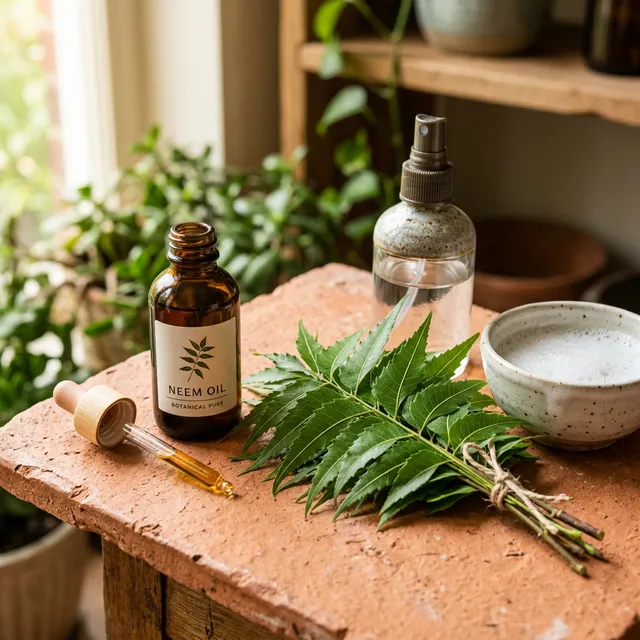
The best neem oil for plants in 2026 is Verdana Cold Pressed Neem Oil. It’s OMRI-listed, retains full azadirachtin content for systemic pest protection, and works on over 200 insect species. One bottle makes dozens of gallons of spray.
Garden Soap Team buying notes
Neem is not a soap substitute. Buy it when you need residual or fungal help — not as the first bottle for a small aphid colony.
- When DIY soap is enough: Contact knockdown of aphids, whiteflies, and mites is a castile mix. Add cold-pressed neem when pests return between sprays, when you want 3–7 days of feeding disruption, or when powdery mildew is in the same bed.
- Soft water vs hard water: Oil + hard water + no emulsifier = broken mix and leaf spots. Always pair neem with a teaspoon-to-tablespoon of true soap in distilled or rainwater. If the spray looks like oil slicks on the surface, do not apply it.
- Plant sensitivity: Oil plus heat burns. Skip neem above ~85–90°F, on wilted plants, and on hairy or waxy foliage until you have patch-tested. Evening spray only.
- Concentration: About 1–2 teaspoons of cold-pressed neem plus 1 tablespoon of castile per quart (or label directions on a 70% product). A “glug” is how gardeners scorch tomatoes. Cold-pressed concentrate beats ready-to-use if you already own a sprayer.
Key Takeaways
- Cold-pressed neem oil retains azadirachtin and provides systemic pest protection that lasts days after application
- Clarified hydrophobic extract (CHE) works only on contact — effective but requires more frequent spraying
- Always mix neem oil with a soap emulsifier like castile soap for proper water dispersion
- Standard dilution is 2 tablespoons neem oil per gallon of water for foliar spray
- Apply in the evening to prevent leaf burn and protect pollinators
- OMRI-listed products guarantee compliance with organic gardening standards
- Neem oil and insecticidal soap serve different roles — using both gives the strongest organic pest control
What Makes a Good Neem Oil Product?
Not all neem oil products are the same. The quality gap between brands is huge, and picking the wrong one means wasted money and unprotected plants.
Here’s what separates a great neem oil from a mediocre one:
Azadirachtin content. This is the active compound that disrupts insect feeding, molting, and reproduction. Cold-pressed neem oil contains 300 to 2,500 ppm of azadirachtin depending on the source. Cheap refined products strip most of it out.
Extraction method. Cold-pressed extraction preserves the full spectrum of active compounds. Solvent-extracted or heat-processed neem loses potency fast.
OMRI listing. The Organic Materials Review Institute certifies products for organic gardening. If a neem oil carries the OMRI seal, you know it meets strict purity standards with no synthetic additives.
Concentration. Concentrates cost more upfront but produce far more spray per dollar. Ready-to-use (RTU) sprays are convenient for small jobs but expensive at scale.
Top 5 Neem Oil Products for Gardens (2026)
| Rank | Product | Type | Organic | Price | Best For |
|---|---|---|---|---|---|
| 1 | Verdana Cold Pressed Neem Oil | Concentrate | ✅ OMRI | ~$18 | Best overall, vegetable gardens |
| 2 | Harris Neem Oil | Concentrate | ✅ OMRI | ~$13 | Budget-friendly concentrate |
| 3 | Bonide Neem Oil Concentrate | Concentrate | ✅ | ~$14 | Multi-purpose (insect + fungus) |
| 4 | Garden Safe Neem Oil Extract (RTU) | Ready-to-use | ✅ | ~$9 | Small gardens, beginners |
| 5 | Monterey 70% Neem Oil | Concentrate | ✅ OMRI | ~$20 | Large-scale organic growers |
1. Verdana Cold Pressed Neem Oil ⭐ Best Overall
Check price on Amazon →Why it wins: Verdana uses 100% cold-pressed neem oil with no solvents and no additives. The azadirachtin is fully intact, which means you get both contact and systemic pest control in one product. It’s OMRI-listed and works on aphids, whiteflies, spider mites, mealybugs, and fungal issues like powdery mildew.
Pros:
- High azadirachtin content from cold-press extraction
- OMRI-listed for certified organic gardens
- Versatile — pest control and fungicide in one
- Concentrate format offers excellent cost-per-gallon value
Cons:
- Strong neem smell (typical of cold-pressed products)
- Must be mixed with an emulsifier before spraying
Best for: Gardeners who want maximum pest-fighting power and don’t mind mixing their own spray. Pair it with castile soap using our neem oil insecticidal soap recipe for the best results.
2. Harris Neem Oil ⭐ Best Budget Option
Check price on Amazon →Why it’s great: Harris delivers cold-pressed neem oil at a lower price point without cutting corners on quality. It’s OMRI-listed and carries solid azadirachtin levels for effective pest and disease management.
Pros:
- Most affordable OMRI-listed concentrate on this list
- Cold-pressed for full compound retention
- Works as both insecticide and fungicide
Cons:
- Smaller bottle size means frequent reordering for large gardens
- Can solidify in cool temperatures (warm before mixing)
Best for: Budget-conscious gardeners and anyone trying neem oil for the first time who doesn’t want to invest $20+ on the first bottle.
3. Bonide Neem Oil Concentrate
Check price on Amazon →Why it’s great: Bonide is a trusted name in garden care. This neem concentrate works as an insecticide, miticide, and fungicide — a true triple-threat product. It handles everything from aphids to black spot on roses.
Pros:
- Three-in-one protection (insects, mites, fungal diseases)
- Clear mixing instructions on the label
- Widely available at local garden centers
Cons:
- Uses clarified hydrophobic extract (reduced azadirachtin)
- Not as potent for systemic protection as cold-pressed options
Best for: Gardeners who want a reliable multi-purpose product from a well-known brand, especially for ornamental plants and roses.
4. Garden Safe Neem Oil Extract (Ready-to-Use)
Check price on Amazon →Why it’s great: No mixing, no measuring, no emulsifiers needed. Just pick up the bottle and spray. Garden Safe RTU is the most beginner-friendly neem product available.
Pros:
- Zero preparation required — spray directly from the bottle
- Available at nearly every hardware and garden store
- Good for spot-treating small infestations
Cons:
- Expensive per ounce compared to concentrates
- Lower neem concentration than DIY mixes
- Not practical for gardens with more than a few plants
Best for: First-time users, apartment gardeners with a few houseplants, or anyone who needs a quick grab-and-spray solution for a minor pest issue.
5. Monterey 70% Neem Oil ⭐ Best for Large Gardens
Check price on Amazon →Why it’s great: Monterey packs 70% neem oil into a concentrated formula that goes a long way. OMRI-listed and designed for serious growers managing large plots, orchards, or market gardens.
Pros:
- Highest neem concentration on this list (70%)
- OMRI-listed for organic certification compliance
- Extremely economical for large-scale applications
- Controls a wide range of pests and fungal diseases
Cons:
- Requires careful dilution — too much can burn leaves
- Strong smell even by neem standards
Best for: Experienced growers with large gardens, raised bed setups, or small farms who spray regularly and need maximum coverage per dollar.
Cold-Pressed Neem Oil vs Clarified Hydrophobic Extract (CHE)
This is the most important distinction when shopping for neem oil, and most guides skip it.
| Feature | Cold-Pressed Neem Oil | Clarified Hydrophobic Extract (CHE) |
|---|---|---|
| Azadirachtin | ✅ Present (300-2,500 ppm) | ❌ Removed during processing |
| Kill method | Systemic + contact | Contact only (suffocation) |
| Duration | 3-7 days of protection | Active only while wet |
| Fungicidal | Yes | Limited |
| Pest resistance | Low risk (multi-mode action) | Higher risk (single mode) |
| Smell | Strong | Mild |
| EPA registration | Not always required | Usually EPA-registered |
The bottom line: Cold-pressed neem oil is the stronger pest management tool because azadirachtin disrupts the insect life cycle at multiple stages. CHE products like Bonide’s concentrate still work, but they function more like a contact-kill spray — similar to how insecticidal soap works.
If you’re dealing with recurring pest problems or want preventive protection, cold-pressed is worth the extra cost.
How to Dilute Neem Oil (Correct Ratios)
Getting the dilution wrong is the #1 reason neem oil “doesn’t work.” Too little and it’s ineffective. Too much and it burns leaves.
Standard foliar spray:
- 2 tablespoons (1 oz) neem oil per gallon of warm water
- 1 teaspoon liquid castile soap per gallon (emulsifier)
Light preventive spray:
- 1 tablespoon neem oil per gallon of warm water
- 1 teaspoon liquid castile soap per gallon
Heavy infestation spray:
- 3 tablespoons neem oil per gallon of warm water
- 1 tablespoon liquid castile soap per gallon
Mixing steps:
- Warm your water to about 90-100°F (neem oil solidifies in cold water)
- Add the castile soap to the water and stir
- Add the neem oil slowly while stirring continuously
- Pour into a spray bottle and shake well before each use
- Use the entire batch within 8 hours — neem oil breaks down fast once mixed
Need the full step-by-step mixing guide? See our complete how to make insecticidal soap tutorial, which covers emulsifier options and mixing techniques.
What Is the Best Application Schedule?
Timing matters as much as the product itself. Here’s a proven spray schedule based on your situation:
Active infestation:
- Spray every 5-7 days
- Continue for 2-3 full cycles (14-21 days total)
- Spray all leaf surfaces — tops and undersides
- Drench the soil surface to target larvae and pupae
Prevention (no visible pests):
- Spray every 14 days during peak growing season
- Reduce to monthly during cooler months
- Focus on plants that attract your common pests
Post-infestation maintenance:
- Spray weekly for 2 weeks after the last pest sighting
- Then switch to the 14-day prevention schedule
Time of day: Always spray in the early morning (before 9 AM) or evening (after 6 PM). Neem oil plus direct sunlight causes leaf burn, especially on tender new growth.
Neem Oil vs Insecticidal Soap: Which Should You Use?
This is not an either/or decision. These products complement each other, and the best organic pest control programs use both.
| Factor | Neem Oil | Insecticidal Soap |
|---|---|---|
| Speed | Slow (days) | Fast (minutes) |
| Duration | 3-7 days | Gone when dry |
| Kill method | Systemic disruption | Contact suffocation |
| Fungal control | ✅ Yes | ❌ No |
| Plant safety | Moderate (can burn) | High (very gentle) |
| Smell | Strong | None |
| Egg disruption | ✅ Partial | ❌ No |
Use insecticidal soap when: You see active pests and need them dead now. Soap kills on contact within minutes. It’s the first-response tool.
Use neem oil when: You want lasting protection that continues working after the spray dries. Neem is the preventive, long-game tool.
Use both when: You have a serious infestation. Spray insecticidal soap first to knock down the visible population, then follow up with neem oil 24-48 hours later for systemic protection. Our neem oil insecticidal soap recipe combines both into a single spray for convenience.
For a deeper breakdown, read our full insecticidal soap plant safety guide before spraying sensitive species.
Which Pests Does Neem Oil Control?
Neem oil works against over 200 insect species. Here are the most common garden pests it handles effectively:
- Aphids — disrupts reproduction, reduces colonies over 1-2 weeks
- Whiteflies — interferes with feeding and egg-laying
- Spider mites — kills on contact and prevents population rebound
- Mealybugs — penetrates waxy coating better than most sprays
- Scale insects — systemic action reaches insects under protective shells
- Thrips — disrupts larval development in soil
- Fungus gnats — soil drenches kill larvae effectively
- Japanese beetles — acts as a feeding deterrent on treated foliage
- Caterpillars — disrupts molting in early larval stages
Neem also suppresses fungal diseases including powdery mildew, black spot, rust, and leaf spot. This dual action makes it more versatile than insecticidal soap alone.
Does Neem Oil Work on Indoor Plants?
Yes, but with one big caveat: the smell. Cold-pressed neem oil has a strong garlic-sulfur odor that lingers indoors for 12-24 hours.
Tips for indoor use:
- Use the light dilution ratio (1 tablespoon per gallon)
- Spray in a well-ventilated area or take plants outside to spray
- Wipe excess spray off leaves after 30 minutes to reduce smell
- Consider CHE-based products for indoor use since they smell milder
- Apply to soil as a drench for fungus gnats without the foliar odor
For indoor plants, many gardeners prefer straight insecticidal soap for its zero-smell advantage, then reserve neem oil for outdoor applications.
Can Neem Oil Damage Plants?
Neem oil is safe for most plants when used correctly. But it can cause damage in three situations:
1. Spraying in direct sunlight. Oil on leaf surfaces magnifies heat and light, causing burns. Always spray early morning or evening.
2. Using too high a concentration. Stick to the recommended 2 tablespoons per gallon. More is not better with neem oil.
3. Sensitive plant species. Some plants react poorly to any oil-based spray. Known sensitive plants include:
- Impatiens
- Fuchsias
- Some fern varieties
- Seedlings under 2 weeks old
- Plants already stressed by drought or disease
Always patch test. Spray a few leaves and wait 48 hours before treating the entire plant. If you see yellowing, wilting, or spotting, dilute further or switch to insecticidal soap as a safer alternative.
How to Store Neem Oil Properly
Neem oil degrades quickly when stored wrong. Follow these rules to keep it effective:
- Store in a cool, dark place — heat and light break down azadirachtin
- Keep the cap sealed tight — oxygen exposure reduces potency
- Shelf life: Unopened cold-pressed neem oil lasts 1-2 years; opened bottles should be used within 12 months
- Cold weather tip: Neem oil solidifies below 65°F. Place the bottle in warm water for 10 minutes before mixing — this is normal and doesn’t affect quality
- Never store mixed spray — once diluted with water and soap, use it within 8 hours. Azadirachtin breaks down rapidly in solution
Final Verdict: Which Neem Oil Should You Buy?
For most gardeners: Verdana Cold Pressed Neem Oil is the best all-around choice. Full azadirachtin content, OMRI-listed, and excellent value as a concentrate.
On a tight budget: Harris Neem Oil delivers cold-pressed quality at a lower price.
For beginners: Garden Safe RTU gets you started with zero learning curve.
For large operations: Monterey 70% Neem Oil offers the best coverage per dollar at scale.
Whichever product you pick, pair it with a soap emulsifier for proper mixing. Our neem oil insecticidal soap recipe walks through the exact process. And if you’re new to organic pest control, start with our how to make insecticidal soap guide to build a solid foundation before adding neem to your routine.
Frequently Asked Questions
What is the best neem oil for vegetable gardens? ▼
Verdana Cold Pressed Neem Oil is the best pick for vegetable gardens. It's OMRI-listed, cold-pressed to retain maximum azadirachtin, and safe to use on all edible crops with a standard pre-harvest waiting period of one day.
How often should I spray neem oil on my plants? ▼
For active pest problems, spray every 5 to 7 days for 2 to 3 weeks. For prevention, spray once every 14 days during the growing season. Always spray in the evening or early morning to avoid leaf burn from sunlight.
Can I mix neem oil with insecticidal soap? ▼
Yes. Liquid castile soap or insecticidal soap acts as an emulsifier that helps neem oil mix evenly with water. This combination provides both immediate contact kill from the soap and long-lasting systemic protection from neem. See our neem oil insecticidal soap recipe for exact ratios.
Does neem oil kill beneficial insects like bees and ladybugs? ▼
Neem oil is low-risk for beneficial insects when applied correctly. It mainly affects insects that chew or suck on treated plant tissue. Spray in the evening after pollinators finish foraging, and avoid spraying open blooms directly.
What is the difference between cold-pressed neem oil and clarified hydrophobic extract? ▼
Cold-pressed neem oil contains azadirachtin, the active compound that disrupts insect feeding and reproduction. Clarified hydrophobic extract of neem oil (CHE) has the azadirachtin removed and works only by suffocating pests on contact. Cold-pressed is more effective for long-term pest management.
 ✓
✓ The Garden Soap Team writes every recipe and guide on this site. Formulas follow published horticultural guidance — university extension resources, the UC IPM program, and OMRI standards — and we cross-check concentrations and plant-safety warnings against documented gardener experience before publishing. No harsh chemicals, no guesswork passed off as expertise.
📚 Related Articles
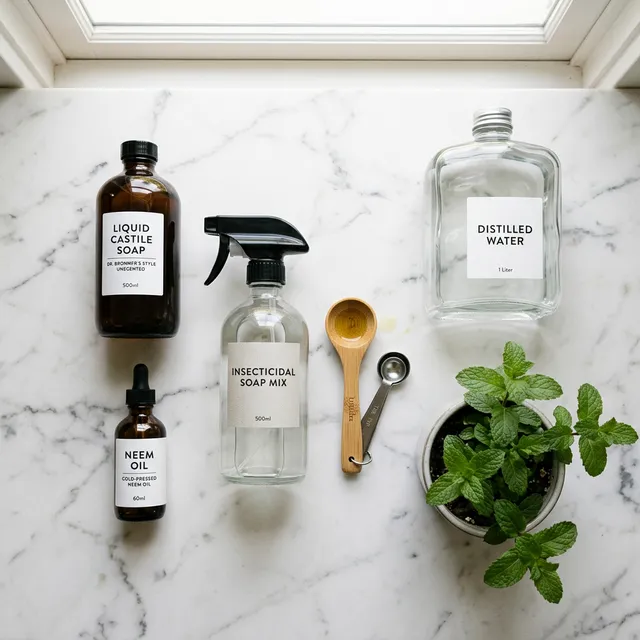
recipesNeem Oil Insecticidal Soap Spray
Soap knocks pests down; neem adds a few days of feeding disruption. Mix ratios, evening timing, and when plain castile is still enough.
 guides
How to Make Insecticidal Soap at Home
Core 3-ingredient method: 1 tablespoon unscented castile per quart, leaf-underside coverage, and the mixing mistakes that burn plants.
 guides
Insecticidal Soap Plant Safety Guide
Insecticidal soap is gentle — but not on every plant. Learn which plants are sensitive, how to protect them, and safe application tips.